

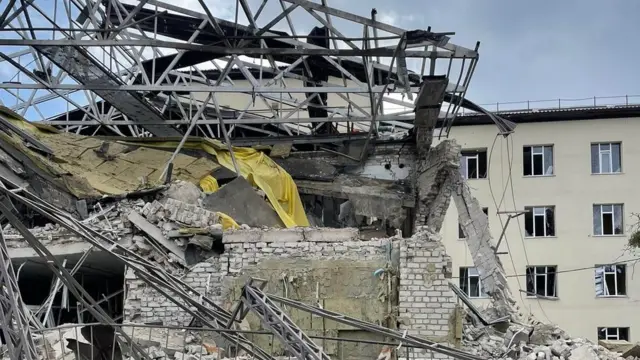
Healthcare services in Ukraine have faced a marked escalation in hostilities during 2025, with reported attacks increasing by nearly one fifth compared with the previous year, according to data compiled by the World Health Organization (WHO). As Ukraine enters its fifth year of full-scale war, the cumulative toll on its medical system continues to deepen.
Since 24 February 2022, when large-scale hostilities intensified in Ukraine, WHO has verified at least 2,881 incidents affecting healthcare facilities, personnel, ambulances and pharmaceutical warehouses across the country. These attacks, documented under WHO’s Surveillance of Attacks on Healthcare initiative, represent serious breaches of international humanitarian law and have resulted in hundreds of casualties among patients and health workers.
Intensified Pressure on Ukraine’s Health Infrastructure
In 2025 alone, attacks on healthcare facilities in Ukraine peaked during the third quarter, when 184 separate incidents were recorded, leading to fatalities and injuries among both staff and patients. Over the four-year period of conflict, more than 200 individuals have been killed and hundreds more injured in incidents affecting medical settings in Ukraine.
Beyond direct assaults on hospitals and clinics, Ukraine’s healthcare system has also been weakened by strikes on civilian infrastructure, particularly energy facilities. Repeated damage to thermal power plants and district heating systems has disrupted electricity, water supply and heating, placing additional pressure on hospitals attempting to maintain safe clinical conditions during winter months. In January 2026, an attack in Kyiv left thousands of buildings without heating during sub-zero temperatures, prompting large-scale displacement within the capital of Ukraine.
Public health experts have long emphasised that health outcomes are closely linked to infrastructure stability. Research published in journals such as The Lancet highlights how interruptions to electricity and water systems in conflict zones contribute to increased morbidity, delayed recovery and heightened risk of infectious disease transmission.
Worsening Population Health Indicators
A WHO assessment conducted in December 2025 revealed significant disparities in self-reported health across Ukraine. Nearly six in ten individuals living in frontline areas described their health as poor or very poor, compared with fewer than half in regions located further from active hostilities.
Mental health indicators are particularly concerning. According to WHO’s findings in Ukraine, 72% of respondents reported symptoms consistent with anxiety or depression during the past year, yet only one in five sought professional support. Peer-reviewed studies, including analyses in The BMJ, have consistently shown that prolonged exposure to armed conflict increases the prevalence of post-traumatic stress disorder, depression and substance use disorders, especially among displaced populations and adolescents.
Non-communicable diseases are also on the rise in Ukraine. Approximately one quarter of the population is estimated to be living with dangerously elevated blood pressure, while access to essential medicines remains severely constrained. Four in five people surveyed reported difficulty obtaining necessary medication, with high prices cited as the primary barrier.
Rehabilitation and Long-Term Care Gaps
The growing number of war-related injuries has intensified demand for surgical care, blood products, infection control and antimicrobial stewardship. However, rehabilitation services remain limited across Ukraine. Only a small proportion of hospitals currently provide inpatient rehabilitation, and access to assistive technologies — including prosthetic devices — is available in a minimal number of facilities.
The disruption of pharmaceutical supply chains has compounded these challenges. Attacks on medical warehouses in 2025 reportedly tripled compared with 2024, interrupting distribution networks and undermining continuity of care nationwide.
WHO’s Operational Response in Ukraine
In response to the deteriorating situation, WHO supported approximately 1.9 million people across Ukraine in 2025 through direct service delivery, medical supply distribution, referrals and professional training. Emergency assistance reached nearly 1,000 health facilities, while more than 1,200 medical evacuations were facilitated to ensure patients could access specialist care.
To mitigate the impact of power outages, WHO delivered 284 generators to healthcare facilities across 23 regions of Ukraine, helping sustain essential services during winter. Efforts have also included the installation of modular clinics, the rehabilitation of damaged facilities and the training of over 2,500 healthcare professionals to reinforce system resilience.
For 2026, WHO has launched an appeal seeking US$42 million to maintain operations in Ukraine and safeguard healthcare access for an estimated 700,000 people.
Health System Resilience Amid Prolonged Conflict
As the war in Ukraine continues, the strain on its health system illustrates the broader humanitarian consequences of sustained conflict. Attacks on medical services not only endanger lives directly but also erode long-term public health stability, disrupt chronic disease management and intensify psychological distress.
Global health authorities maintain that the protection of healthcare in conflict settings is both a legal obligation and a moral imperative. In Ukraine, preserving access to essential services remains critical to preventing further deterioration in population health and ensuring that recovery — whenever peace is achieved — can begin on a stable foundation.