

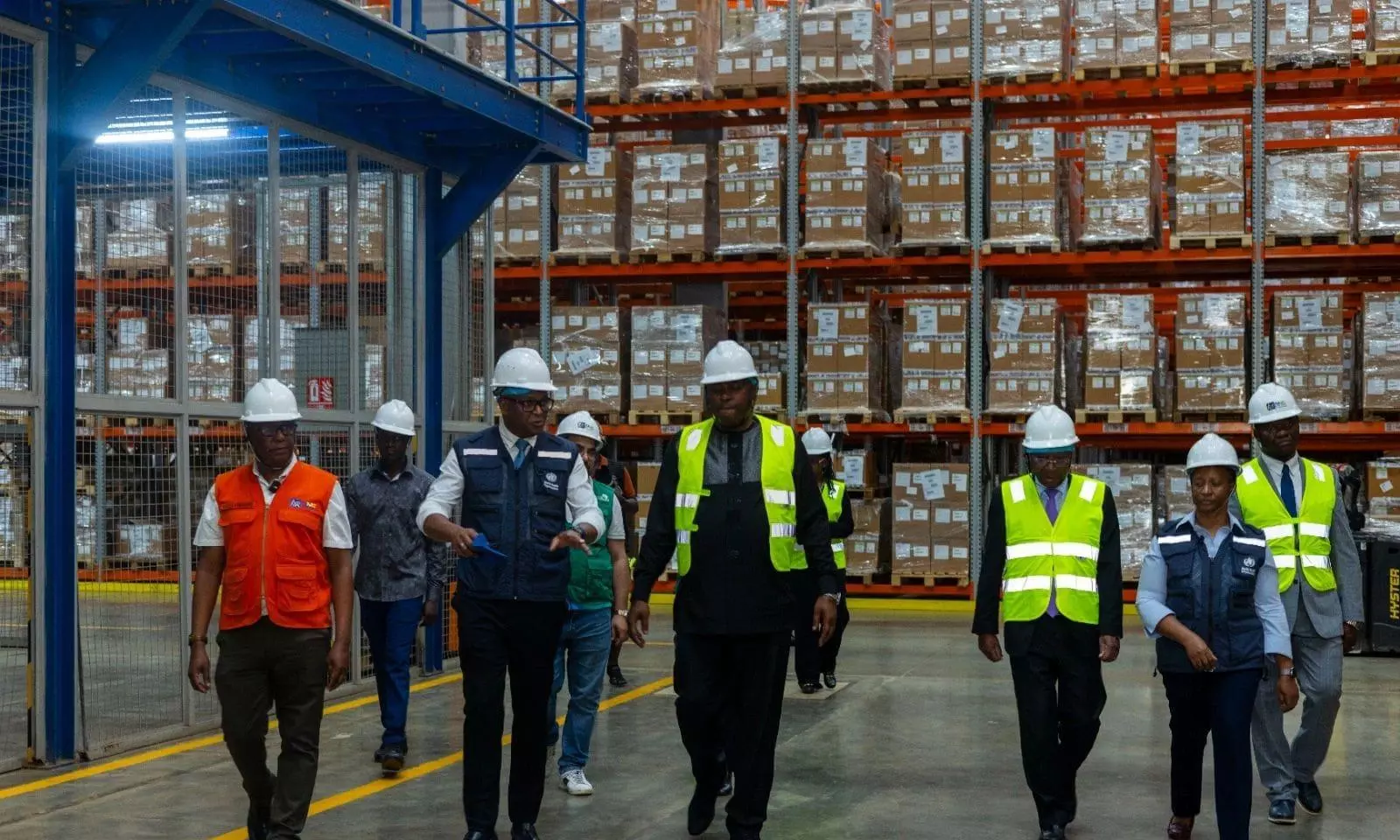

Uganda has reinforced its commitment to regional health security by introducing measures designed to strengthen logistics for the ongoing response to Ebola virus disease caused by the Bundibugyo strain. The initiative forms part of the operational deployment of the Continental Incident Management Support Team (IMST), a coordinated emergency response mechanism established to improve preparedness and response capacity across East and Central Africa.
Health authorities and international partners view efficient logistics as a critical component of infectious disease control, ensuring that medical equipment, protective supplies and essential medicines reach affected communities without unnecessary delays.
Strengthening Regional Emergency Infrastructure
As part of the initiative, senior public health officials visited several strategic logistics facilities in Uganda, including the National Medical Stores, logistics hubs operated by the World Food Programme (WFP) and the United Nations, as well as cargo facilities at Entebbe International Airport.
These assessments focused on evaluating storage capacity, transport systems and operational readiness to support the rapid movement of emergency medical supplies during disease outbreaks. Robust supply chains are recognised by the World Health Organization (WHO) as fundamental to effective outbreak management, particularly when multiple countries require simultaneous support.
Government Commitment to Faster Medical Supply Deployment
During high-level discussions between Uganda's Ministry of Health and representatives of the Continental IMST, the Ugandan Government pledged dedicated warehouse capacity and streamlined customs clearance procedures for emergency medical shipments.
Reducing administrative delays allows essential materials—including personal protective equipment, laboratory supplies, medicines and diagnostic tools—to be distributed more rapidly to healthcare facilities responding to Ebola outbreaks.
These measures are expected to improve emergency operations not only within Uganda but also in neighbouring countries, including the Democratic Republic of the Congo and South Sudan, where cross-border collaboration remains essential for controlling infectious diseases.
Regional Cooperation Remains Central to Ebola Control
Health officials stressed that outbreak management continues to be led by the national governments of Uganda and the Democratic Republic of the Congo, while regional institutions and international organisations provide technical expertise, operational assistance and logistical coordination.
This collaborative model reflects internationally recognised outbreak response strategies, which rely on rapid information sharing, coordinated surveillance, laboratory support and efficient movement of healthcare resources across national borders.
International Organisations Support the Response
The initiative brings together multiple global and regional partners, including Africa CDC, the World Food Programme (WFP), UNICEF, the European Centre for Disease Prevention and Control (ECDC), the European Commission, the International Federation of Red Cross and Red Crescent Societies (IFRC) and Médecins Sans Frontières (MSF).
These organisations contribute expertise in emergency logistics, surveillance, laboratory services, infection prevention and humanitarian operations, helping countries strengthen preparedness against Ebola and other emerging infectious diseases.
Building Long-Term Health Security Across Africa
Public health experts emphasise that investment in logistics extends beyond responding to a single outbreak. Strengthening warehousing, transportation networks and customs procedures improves the overall resilience of healthcare systems, enabling faster responses to future epidemics and other public health emergencies.
As the Continental Incident Management Support Team continues its work, health authorities remain optimistic that sustained cooperation between governments, regional institutions and international partners will enhance outbreak preparedness, improve emergency response efficiency and reinforce health security throughout Africa.