

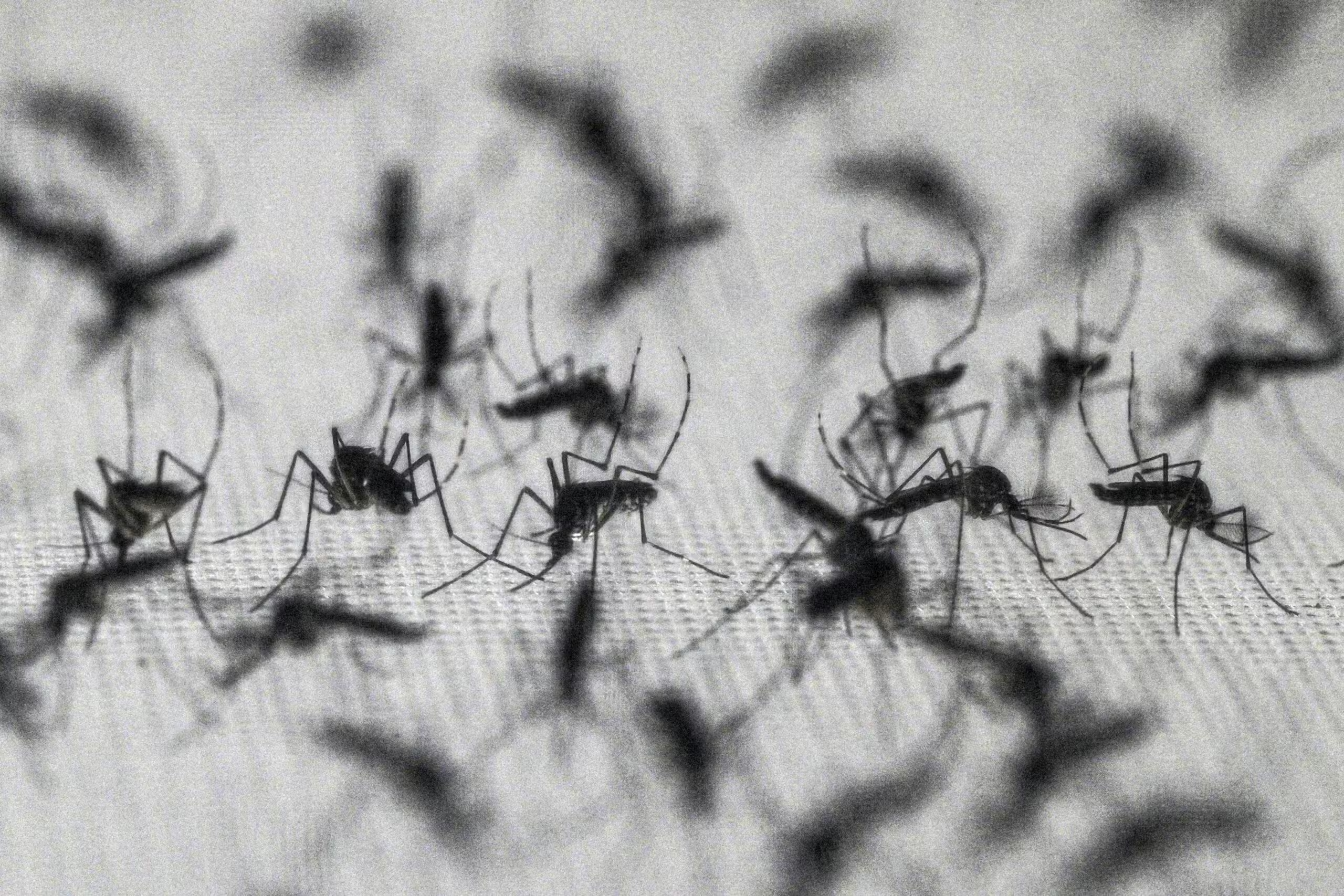

Researchers are gaining a deeper understanding of why some individuals appear to attract mosquitoes more frequently than others, a question that has long intrigued both scientists and the public. Recent findings from studies involving experts in France and other countries suggest that mosquito attraction is influenced by a complex interaction of body odours, heat, carbon dioxide emissions, and skin chemistry.
Medical entomologists explain that mosquitoes do not select their targets randomly. Female mosquitoes, which require blood meals for egg production, rely on highly sensitive sensory systems to identify humans. One of the earliest signals detected is carbon dioxide released through breathing, which can attract mosquitoes from considerable distances. As they move closer, body heat, humidity, and specific odorous compounds emitted by the skin become increasingly important.
Scientists in France studying mosquito behaviour have emphasised that attraction varies between individuals and may change over time depending on physiological and environmental conditions. Research indicates that humans emit hundreds of volatile organic compounds through the skin, many of which are produced by interactions between the body and its natural microbiota.
Recent laboratory investigations involving Aedes aegypti mosquitoes—the species known for transmitting diseases such as dengue fever and yellow fever—identified a group of chemical compounds associated with increased attraction. Among them is 1-octen-3-ol, sometimes referred to as “mushroom alcohol”, a compound linked to the breakdown of skin oils. Researchers observed that even modest differences in the concentration of this substance appeared to influence mosquito preference significantly.
The findings contribute to a growing body of evidence suggesting that skin chemistry plays a central role in mosquito attraction. According to studies published in journals focusing on vector biology and infectious diseases, microorganisms living on human skin help shape the unique odour profile that mosquitoes detect (Verhulst et al., PLoS ONE, 2011).
Some commonly held assumptions, however, have not been strongly supported by scientific evidence. Experts note that there is currently limited reliable data linking mosquito preference to blood type, eye colour, hair colour, or skin pigmentation. Instead, physiological factors such as body temperature, exhaled carbon dioxide, and odour composition appear to be more influential.
Lifestyle habits may also affect attractiveness to mosquitoes. Several studies have suggested that alcohol consumption, particularly beer intake, can increase mosquito attraction by raising body temperature and altering body odour. Research involving Anopheles mosquitoes—the vectors responsible for malaria transmission—found higher mosquito activity around individuals who had recently consumed alcohol.
The issue is becoming increasingly relevant from a public health perspective as climate change expands the geographical distribution of mosquito species capable of carrying infectious diseases. In Europe, including parts of France, invasive species such as the tiger mosquito (Aedes albopictus) have spread into new territories, contributing to concerns about diseases such as chikungunya and dengue fever.
Public health specialists continue to recommend preventive measures to reduce mosquito exposure. These include the use of insect repellents, protective clothing, mosquito nets, and environmental control strategies aimed at limiting breeding sites. Avoiding excessive alcohol consumption and minimising skin exposure during peak mosquito activity periods may also help reduce bites.
As scientific understanding advances, researchers hope that identifying the precise mechanisms behind mosquito attraction could eventually contribute to improved strategies for controlling mosquito-borne diseases worldwide.