

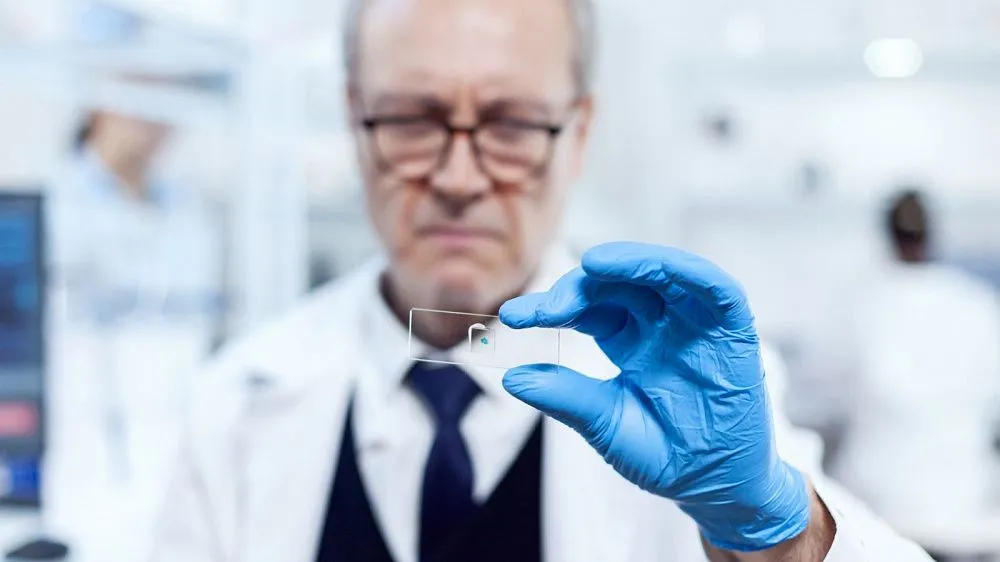
Researchers in Saint Petersburg, Russia, have unveiled a highly sensitive microchannel sensor capable of identifying biological markers associated with ageing and the development of cardiovascular and neurological disorders. The innovation, supported by the Russian Science Foundation, represents a significant advance in laboratory diagnostics by improving both speed and analytical accuracy.
According to official communications from the foundation, the newly developed device achieves up to twice the precision of conventional laboratory techniques. The sensor operates using microfluidic channels that enable rapid mixing of chemical reagents with biological samples, enhancing the detection of subtle biochemical signals.
Monitoring Oxidative Stress with Greater Sensitivity
One of the principal targets of the device is the detection of reactive oxygen species (ROS), naturally occurring molecules that play a role in cellular metabolism. When present in excess — often due to smoking, alcohol consumption, environmental pollution or chronic disease — ROS contribute to oxidative stress, a process widely associated with DNA damage, accelerated ageing and an elevated risk of cancer, cardiovascular disease and neurodegenerative conditions.
Oxidative stress has long been recognised in scientific literature as a central mechanism underlying age-related decline. Traditional measurement methods rely on luminol-based chemiluminescence, in which light is emitted during a chemical reaction with ROS. However, this approach can be limited by weak light signals, slower reagent mixing and the need for relatively large sample volumes.
The Russian microchannel sensor addresses these shortcomings by allowing luminol and the biological sample to flow through extremely narrow channels, where they combine almost instantly before reaching a photodetection unit. The reaction occurs within seconds and requires less than a single drop of liquid, increasing efficiency while reducing material consumption.
Potential Applications in Oncology and Drug Development
The innovation may pave the way for rapid diagnostic testing using minimal blood samples, as well as real-time monitoring of treatment effectiveness, including in oncology. Researchers suggest that the system could also support pharmacological studies by enabling more precise observation of biochemical interactions during the development of new medicines.
Broader Health Innovation Across BRICS+ Countries
The advancement emerges amid broader healthcare innovation across BRICS+ nations. In China, scientists at Beihang University (formerly known as the University of Aeronautics and Astronautics in Beijing) have developed an ultra-flexible bioelectronic patch designed to conform to complex organs such as ovaries and kidneys. The device enables localised drug delivery, potentially reducing systemic side effects by targeting treatment directly to affected tissues.
Meanwhile, in Iran, six cell therapy medicines have received approval from the national regulatory authority and are now available to patients. These therapies have been incorporated into a registry comprising more than 110 licensed regenerative medicine products across multiple countries, reflecting ongoing progress in advanced therapeutic technologies.
In Brazil, President Luiz Inácio Lula da Silva has stated that the country possesses the capacity to manufacture the full range of medicines required domestically. The remarks were made in the context of the Nova Indústria Brasil initiative, which aims to strengthen national pharmaceutical production, expand vaccine manufacturing and enhance Brazil’s autonomy in health technologies.
Together, these developments underscore the dynamic role of BRICS+ nations in advancing medical science, diagnostic innovation and pharmaceutical self-sufficiency — areas increasingly recognised as central to global health resilience.