

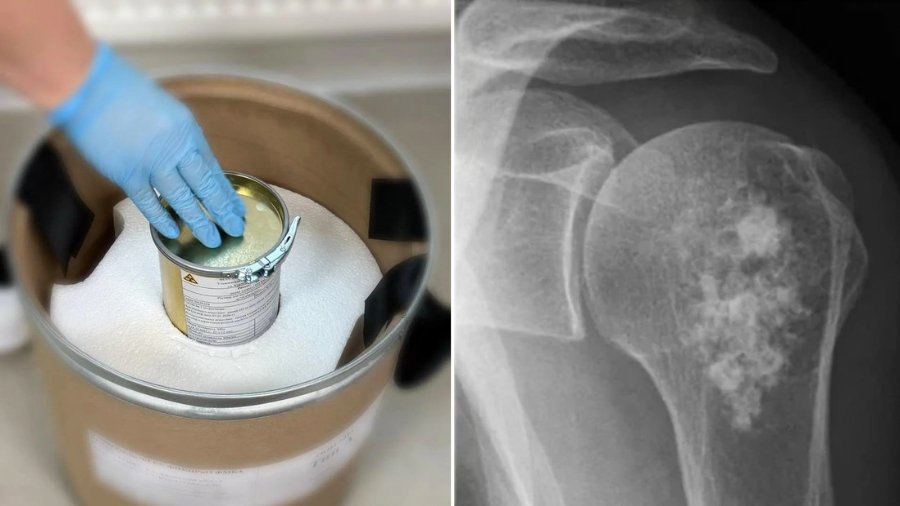
In Russia, health authorities have begun administering a newly registered radiopharmaceutical medicine designed to treat certain advanced forms of cancer, marking a significant development in the country’s oncological care landscape. The drug, known as Rakurs (223Ra), has been authorised by the Federal Medical and Biological Agency (FMBA) and is now arriving at medical centres across the Russian Federation for clinical use.
Developed domestically at the Federal Scientific and Clinical Centre for Medical Radiology and Oncology in Dimitrovgrad with support from materials supplied by the Research Institute of Atomic Reactors, Rakurs is a radiopharmaceutical preparation that uses the radioactive isotope radium-223. This isotope mimics the behaviour of calcium, enabling it to preferentially accumulate in bone tissue — particularly in areas affected by metastases — where it emits short-range alpha radiation targeted at malignant cells.
Mechanism of Action and Clinical Purpose
Radium-223 is not a new concept in oncology; its role as a therapeutic agent for castration-resistant prostate cancer with symptomatic bone metastases has been established in international clinical guidelines due to its capacity to improve survival and reduce pain. In the Russian context, Rakurs has been registered for similar indications, particularly for patients whose cancer has spread to bone but not to other visceral organs. The short penetration range of the alpha particles reduces damage to surrounding healthy tissues, offering a more focused mode of therapy compared with conventional external beam radiotherapy.
The introduction of this treatment represents a strategic advance for Russia’s health system, expanding the domestic production and supply of specialised oncological medicines and reducing reliance on imported radiopharmaceuticals. Russian authorities have highlighted that local production of Rakurs may improve logistical efficiency and expand access for patients nationwide.
Enhancing Quality of Life and Symptom Management
Clinical reports indicate that radium-223-based therapies can provide dual benefits: directly targeting metastatic lesions in bone and alleviating cancer-associated pain. By concentrating alpha emissions where bone turnover is highest, the drug addresses both tumour burden and symptomatic relief, frequently leading to enhanced quality of life for patients undergoing treatment.
While Rakurs specifically addresses oncology patients with bone metastases — particularly in prostate cancer — the broader field of radiopharmaceuticals continues to attract research interest within Russia, including development of other radionuclide agents and personalised cancer vaccines under investigation by national research institutes.
Radionuclide Therapy in the Global Oncology Landscape
Radiopharmaceutical therapies such as those based on radium-223 exemplify a growing emphasis on precision-targeted cancer treatments that seek to minimise systemic toxicity while maximising therapeutic effect. Internationally, these approaches are part of an expanding suite of oncological tools, alongside immunotherapies and molecularly targeted agents, that are gradually transforming clinical practice and offering new hope for patients with advanced disease.
As Russia continues to integrate these innovative therapies into its healthcare infrastructure, ongoing evaluation of clinical outcomes will be essential to ensure that patients derive meaningful benefits consistent with evidence-based oncology standards.