

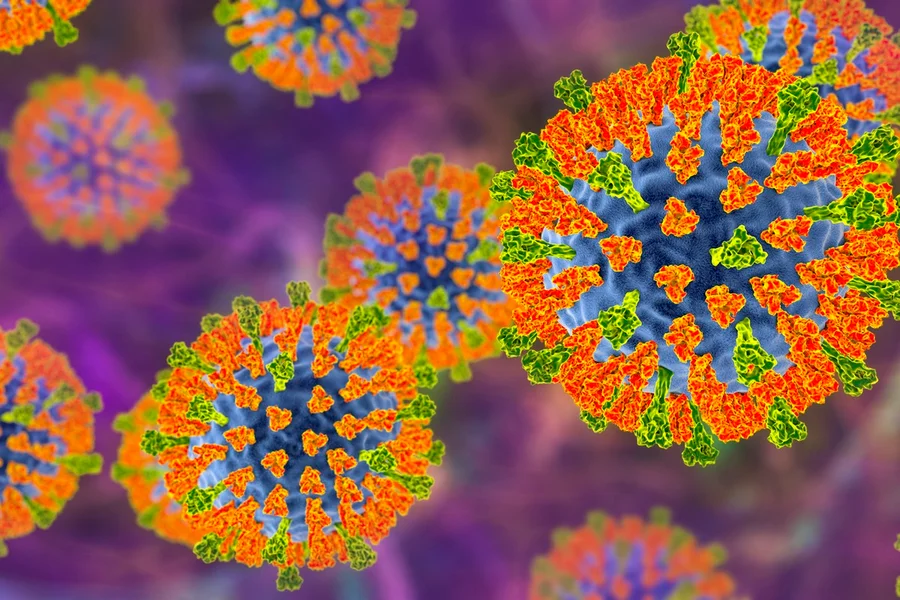
As the world enters 2026, infectious disease specialists are warning that a combination of climate change, population growth and global mobility is increasing the likelihood of new viral outbreaks across continents. Viruses continue to evolve rapidly, ignoring national borders and spreading faster than ever through human, animal and environmental interactions.
According to infectious disease researchers, several viruses already known to science are expected to pose heightened risks in the coming year, with particular concern focused on avian influenza, mpox and insect-borne pathogens affecting regions including the United States, Africa, South America and Europe.
Influenza A and the persistent pandemic threat
Influenza A remains one of the most closely monitored viral threats worldwide. The virus infects multiple animal species and is characterised by its ability to mutate quickly. The most recent influenza pandemic, caused by the H1N1 subtype in 2009, resulted in more than 280,000 deaths globally within its first year and continues to circulate as a seasonal virus.
More recently, scientists have raised alarms over a highly pathogenic strain of avian influenza A (H5N1). First identified in humans in China in 1997, the virus has spread internationally through migratory wild birds. In 2024, H5N1 was detected for the first time in dairy cattle in the United States, later establishing itself in herds across several American states.
The transmission of H5N1 from birds to mammals has heightened concerns that the virus could further adapt to humans. Research has already documented multiple cases of transmission from cattle to humans in the United States. Scientists stress that sustained human-to-human transmission would represent a critical step towards a new influenza pandemic.
Current seasonal influenza vaccines are unlikely to protect against H5N1, although research groups are actively working on vaccine candidates designed specifically for this strain.
Mpox establishes a global footprint
Mpox, formerly known as monkeypox, was first identified in the 1950s and for decades was observed primarily in sub-Saharan Africa. Despite its former name, the virus is mainly carried by rodents and can occasionally infect humans. It is closely related to smallpox and typically causes fever and painful skin lesions that may persist for several weeks.
The virus exists in multiple variants, including clade I, which is generally associated with more severe disease, and clade II, which tends to cause milder illness. A vaccine against mpox is available, although no specific antiviral treatment currently exists.
In 2022, a global outbreak of clade II mpox spread to more than 100 countries, including nations that had never previously reported cases. This outbreak was driven by sustained human-to-human transmission through close physical contact, often during sexual activity.
Although global case numbers have declined since that outbreak, clade II mpox has now become endemic worldwide. Meanwhile, several Central African countries have reported increasing cases of clade I mpox since 2024. In the United States, four clade I cases were recorded from August 2025, including infections in individuals with no travel history to Africa. How mpox transmission patterns will evolve internationally in 2026 remains uncertain.
Oropouche virus and the expanding reach of insect-borne disease
Another emerging concern is the Oropouche virus, an insect-borne pathogen first identified in the 1950s on the island of Trinidad, off the coast of South America. The virus is transmitted by mosquitoes and biting midges and typically causes fever, headache and muscle pain. While symptoms usually resolve within days, some patients experience prolonged weakness, and relapses have been documented.
For decades, human infections were thought to be confined to the Amazon region. However, since the early 2000s, cases have been reported across South America, Central America and the Caribbean. In the United States, infections have primarily been identified in travellers returning from affected regions.
There are currently no vaccines or specific treatments for Oropouche virus infection. The insect vectors capable of transmitting the virus are present throughout much of North and South America, including the south-eastern United States, raising concerns that the virus’s geographic range may continue to expand in 2026.
Additional viral pressures on global health
Beyond these priority threats, scientists are also monitoring ongoing chikungunya outbreaks, which may affect international travellers and have prompted discussions around vaccination in some populations.
At the same time, measles cases are rising globally, including in the United States and Europe, largely due to declining vaccination coverage. Public health experts have also warned that HIV infections could resurge in certain regions as disruptions to international aid programmes undermine prevention and treatment efforts.
Researchers emphasise that unknown viruses may still emerge, particularly as human activity continues to disrupt ecosystems and increase contact between people, animals and novel pathogens.
Surveillance as a cornerstone of prevention
Experts underline that human health, animal health and environmental stability are deeply interconnected. Strengthening global surveillance systems, investing in vaccine development and improving international cooperation are seen as essential strategies to reduce the impact of both known and emerging viral threats in 2026 and beyond.