

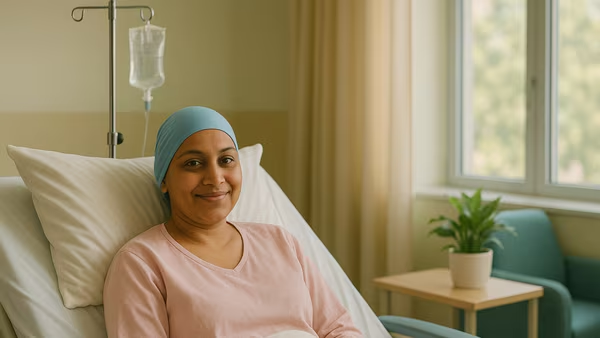
Cancer remains a pressing health challenge in India, where late diagnoses and limited specialised facilities continue to hinder effective treatment. Each year, around two million Indians are diagnosed with cancer, yet only 30% are detected in the early stages (I/II), when survival rates are highest. The disparity in access to oncologists—just two clinical oncologists per million inhabitants, compared with 20–25 per million in the United States—further complicates the journey for patients seeking timely care.
Challenges in Accessing Oncology Care
For many patients, navigating the healthcare system can be arduous. Medha, a 40-year-old patient diagnosed with stage III cervical cancer, initially dismissed persistent abdominal pain and irregular bleeding as hormonal changes. It was only on her third consultation that she underwent a Pap smear, highlighting the widespread gaps in preventive screening. Long commutes, escalating treatment costs, and crowded hospital wards compound the physical and emotional burden of treatment. While quality care is available at leading multi-specialty hospitals, the lack of patient-focused infrastructure—such as private recovery spaces—can impede rest and recovery, particularly during chemotherapy.
Lessons from Cardiology and Dialysis
India’s experience in cardiology offers a template for transforming oncology care. Dr Devi Shetty’s Narayana Hrudayalaya dramatically expanded access to cardiac surgery by reducing costs through productivity optimisation and economies of scale, a strategy he refers to as “The Walmart Approach”. Similarly, the expansion of dialysis centres by organisations such as NephroPlus and Sparsh NephroCare has improved access, cutting travel times and costs for patients with chronic kidney disease. These models demonstrate that decentralisation, process innovation, and operational efficiency can make complex treatments more accessible to large populations.
A Network of Specialised Cancer Centres
Comprehensive Cancer Centres (CCCs) remain the gold standard for oncology treatment, offering surgery, clinical therapy, and radiotherapy under one roof. However, their high capital requirements—often exceeding 500 million Indian rupees—limit proliferation. Many existing centres are situated within multi-specialty hospitals, leading to overcrowding and extended waiting periods. A potential solution lies in developing a network of smaller, decentralised facilities focused on one or two modalities of care. This approach, modelled on the US Oncology Network, would bring treatment closer to patients’ homes while maintaining quality standards.
Innovation in Surgical Oncology
Specialty Surgical Oncology (SSO), headquartered in Mumbai, exemplifies this approach. By establishing dedicated surgical oncology centres, the network has developed organ-specific surgical teams and pioneered advanced procedures such as cytoreductive surgery, HIPEC, and parenchymal-sparing liver surgery. Dedicated infrastructure and trained staff minimise infection risks, enhance efficiency, and make complex procedures more accessible without compromising care quality.
Enhancing Oncologist Productivity
India faces a critical shortage of oncologists, with an estimated 3,000 additional clinical oncologists required to meet current demand. Digital tools, including integrated electronic health records and AI-driven Clinical Decision Support Systems (CDSS), can enhance physician productivity by streamlining patient data, generating personalised treatment plans, and aligning care with global protocols. As Dr Sunny Garg, Medical Director at Everhope Oncology, notes, holistic patient support—beyond medical protocols—is essential to improving outcomes.
Holistic and Patient-Centred Care
Early diagnosis alone does not guarantee improved outcomes; comprehensive support throughout the treatment journey is critical. International examples, such as the Leaders in Oncology Care (LOC) in the UK, integrate nutrition, psychological therapy, physiotherapy, fertility preservation, and second opinions into care. In India, such services remain scarce, with fewer than 5% of centres offering supportive interventions like scalp cooling during chemotherapy or structured mental health support. Palliative care is also largely unavailable, with 98% of stage IV patients receiving no formal support.
Designing Oncology Centres Around Patients
Patient-focused design improves both experience and clinical outcomes. The Cleveland Clinic’s Taussig Cancer Institute, for example, incorporates natural lighting, private infusion rooms, art therapy, and accessible amenities to reduce stress and enhance recovery. Adopting similar principles in India—providing private chemotherapy suites, integrated support services, and streamlined processes—could transform the patient experience and reduce treatment-related anxiety.
Introducing Everhope Oncology
Launched in 2025, Everhope Oncology represents a new model for patient-centred cancer care in India. Combining the operational expertise of W Health Ventures with the clinical strength of Narayana Health, Everhope is establishing a network of specialised facilities offering surgical and clinical oncology. Its mission is to improve access, streamline care, and enhance early detection, delivering high-quality services closer to patients’ communities.
Conclusion
The evolution of cancer care in India requires innovative approaches, decentralised networks, and a focus on holistic, patient-centred treatment. By learning from successes in cardiology, dialysis, and international oncology networks, India has the potential to dramatically improve survival rates and redefine the patient experience, ensuring that life-saving therapies are accessible, efficient, and compassionate.