

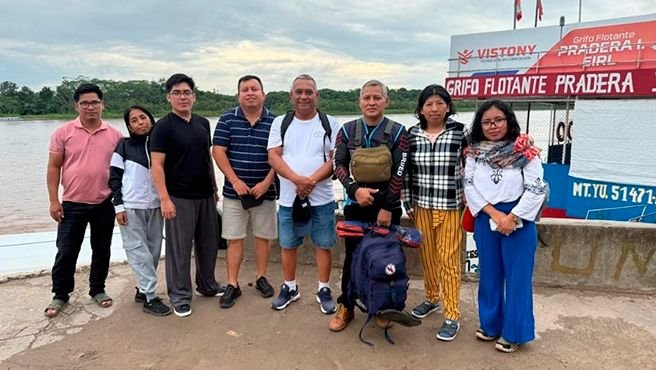
Lima, Peru – Health authorities in Peru have intensified efforts to control cases of whooping cough in remote areas of the Amazon, as specialised brigades from the Ministry of Health travelled to the native community of Nuevo Cusco, located in the district of Jeberos, Loreto region. The intervention forms part of a national strategy to reduce immunisation gaps in geographically isolated populations, where access to healthcare remains limited.
The operation focused on vaccinating children against pertussis, a highly contagious respiratory infection caused by Bordetella pertussis, and on providing prophylactic treatment to individuals who had direct contact with confirmed cases. According to the Peruvian Ministry of Health, the initiative seeks to protect the most vulnerable group — infants and young children — who are at greater risk of severe complications, hospitalisation and death.
Coordinated through the Alto Amazonas Integrated Health Network, the response extended beyond clinical care. Health professionals also carried out community engagement activities, holding dialogues with local leaders to address concerns, overcome linguistic and cultural barriers, and strengthen trust in vaccination programmes. This intercultural approach is considered essential for ensuring acceptance of preventive measures in indigenous territories across Peru.
Between 9 and 12 January, a multidisciplinary team composed of physicians, registered nurses, health technicians and other professionals delivered on-site medical care. To reach Nuevo Cusco and neighbouring communities, the teams travelled by land and river, transporting vaccines and essential medicines under challenging logistical conditions — a common obstacle in the Peruvian Amazon.
Public health experts underline that vaccination remains the most effective tool to prevent whooping cough. The World Health Organization (WHO) states that routine immunisation can prevent severe disease and significantly reduce transmission, particularly when high coverage is achieved in early childhood. Scientific studies published in journals such as The Lancet Infectious Diseases confirm that outbreaks are more likely to occur in settings with low vaccination rates or delayed immunisation schedules.
By maintaining operations in hard-to-reach regions, the Ministry of Health reaffirmed Peru’s commitment to health equity and disease prevention. Officials emphasised that rapid response actions, combined with culturally sensitive communication, are critical to safeguarding public health and ensuring that no community is left unprotected, regardless of distance or access challenges.
As Peru continues to strengthen its surveillance and immunisation strategies, the intervention in Nuevo Cusco highlights the importance of sustained investment in primary healthcare to prevent vaccine-preventable diseases and protect lives across the country.