

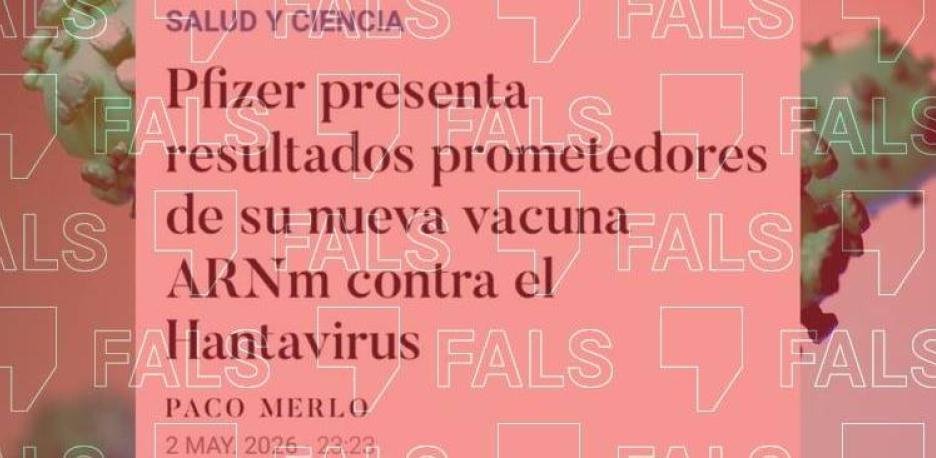

Recent online claims suggesting the development of a promising vaccine against hantavirus have been widely circulated across social media platforms. However, current scientific evidence and official health records indicate that no such vaccine has been approved or is undergoing advanced clinical evaluation. This clarification has been reinforced by fact-checking initiatives and aligns with information from global health authorities, including those referenced in Spain.
According to the World Health Organization (WHO), there is presently no authorised vaccine or specific antiviral treatment available for hantavirus infection. Furthermore, publicly accessible pharmaceutical development pipelines do not list any clinical-stage vaccine candidates targeting hantavirus. This includes the absence of such research within the portfolio of major pharmaceutical companies, despite claims suggesting otherwise.
The spread of misinformation appears to stem from manipulated or misinterpreted content online. Some viral posts have referenced messenger RNA (mRNA) vaccine technology, implying that similar approaches used during the COVID-19 pandemic are being applied to hantavirus. While mRNA platforms have demonstrated rapid development capabilities in response to emerging infectious diseases (Pardi et al., Nature Reviews Drug Discovery, 2018), there is currently no verified evidence that such technology has produced a viable hantavirus vaccine candidate in human trials.
Hantavirus is a zoonotic pathogen primarily transmitted to humans through contact with infected rodent excreta. The disease can lead to severe clinical syndromes, including hantavirus pulmonary syndrome (HPS), which carries a high mortality rate. In certain regions of South America, limited person-to-person transmission has been documented, particularly with the Andes strain, although such cases remain uncommon (Jonsson et al., Clinical Microbiology Reviews, 2010).
The absence of a vaccine highlights the ongoing challenges in developing preventive measures against this group of viruses. Research efforts continue globally, including in Europe and Spain, where public health institutions are actively engaged in surveillance and response strategies for zoonotic diseases. Experts emphasise that, in the absence of vaccination, prevention relies heavily on reducing exposure to rodent habitats and maintaining environmental hygiene.
The situation also underscores the growing impact of misinformation on public health. False or misleading claims about medical advances can create confusion, undermine trust in health systems, and distract from evidence-based guidance. Public health organisations in Spain and internationally continue to stress the importance of relying on verified sources when interpreting developments in medical research.
As scientific investigation into hantavirus continues, health authorities maintain that vigilance, accurate information, and preventive measures remain the most effective tools in managing the risk associated with this infection.