

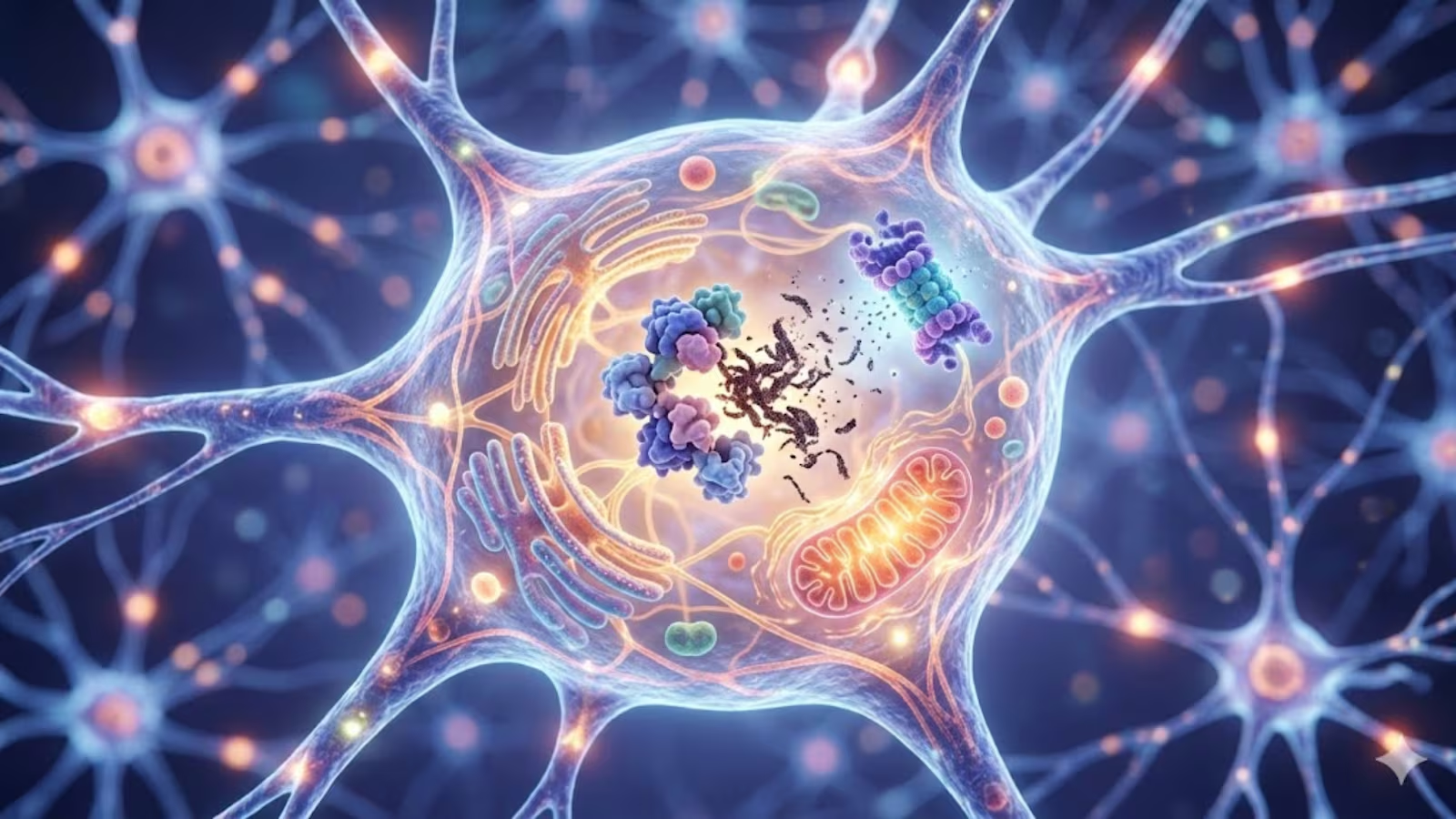
Alzheimer’s disease remains one of the most challenging neurological disorders facing modern medicine. Despite decades of research worldwide, existing therapies remain limited and primarily focus on managing symptoms rather than halting the progression of the disease. However, recent scientific findings suggest that the brain itself may possess a natural cellular mechanism capable of reducing the accumulation of harmful proteins associated with neurodegeneration.
A recent laboratory-based investigation involving human neurons has identified a biological process that appears to help cells eliminate abnormal forms of the tau protein, a molecule strongly linked to Alzheimer’s disease and other forms of dementia. The discovery provides new insights into how certain brain cells may naturally resist damage caused by toxic protein accumulation.
Understanding Tau and Neuronal Damage
Tau is a structural protein that plays an essential role in maintaining the internal framework of neurons. Under healthy conditions, it supports the stability of microtubules, which help transport nutrients and molecules within nerve cells. However, when tau becomes abnormally modified or accumulates excessively, it can form toxic clusters that disrupt neuronal communication and contribute to progressive brain degeneration.
Researchers have long considered tau aggregation to be a central hallmark of Alzheimer’s disease. Understanding how neurons manage or eliminate this protein has therefore become a major focus within the field of Neuroscience.
Gene-Editing Technology Reveals Protective Mechanism
To investigate why some neurons appear more resilient to tau accumulation, scientists used advanced gene-editing techniques based on CRISPR gene editing to analyse the influence of thousands of genes on tau regulation within human brain cells grown in laboratory conditions.
The research identified a protein complex known as CRL5SOCS4, which appears to act as a cellular tagging system. This complex recognises abnormal tau molecules and directs them towards the cell’s internal protein-recycling machinery, where they are broken down and removed.
This mechanism effectively functions as a molecular quality-control process inside neurons, helping prevent the toxic build-up of tau that is commonly observed in Alzheimer’s disease.
Further analysis of brain tissue samples from individuals diagnosed with Alzheimer’s indicated that neurons containing higher levels of this complex were more likely to survive even in environments where tau accumulation was present.
Mitochondrial Stress and Protein Processing
The study also highlighted the role of mitochondria—structures responsible for generating energy within cells—in influencing tau processing. When these cellular components experience damage or metabolic stress, alterations in tau metabolism may occur.
Under such conditions, cells were observed producing a smaller fragment of the protein, approximately 25 kilodaltons in size. This fragment resembles a biological marker known in medical research as NTA-tau, which has been detected in blood and cerebrospinal fluid samples from patients with Alzheimer’s disease.
Scientists believe this phenomenon may be linked to Oxidative Stress, a biological process associated with ageing and several neurodegenerative disorders. Oxidative stress can interfere with the function of the proteasome, the cellular system responsible for degrading unwanted or damaged proteins.
When this protein-recycling system becomes impaired, abnormal processing of tau may occur, potentially increasing the likelihood of toxic aggregates forming within neurons.
Implications for Future Therapies
Although further research will be necessary before clinical applications can be developed, the findings point towards several potential therapeutic strategies. Scientists suggest that future treatments might focus on strengthening the brain’s own protective mechanisms.
Possible avenues include enhancing the activity of the CRL5SOCS4 complex to improve the removal of tau proteins, protecting cellular recycling systems during periods of oxidative stress, and developing therapies aimed at preventing the formation of harmful tau fragments.
In addition to these mechanisms, the genetic screening carried out during the study identified other biological pathways involved in protein modification and cellular membrane organisation, both of which may influence how neurons respond to protein accumulation.
Expanding the Understanding of Neurodegeneration
The identification of this natural cellular defence mechanism represents an important step in understanding how the brain regulates proteins associated with Alzheimer’s disease. By revealing why certain neurons appear more resistant to degeneration, the research provides valuable clues that may guide the development of future treatments.
While the findings remain at an early experimental stage, they reinforce a growing idea within modern neuroscience: that strengthening the brain’s own cellular maintenance systems could become a key strategy in combating neurodegenerative diseases in the years ahead.