

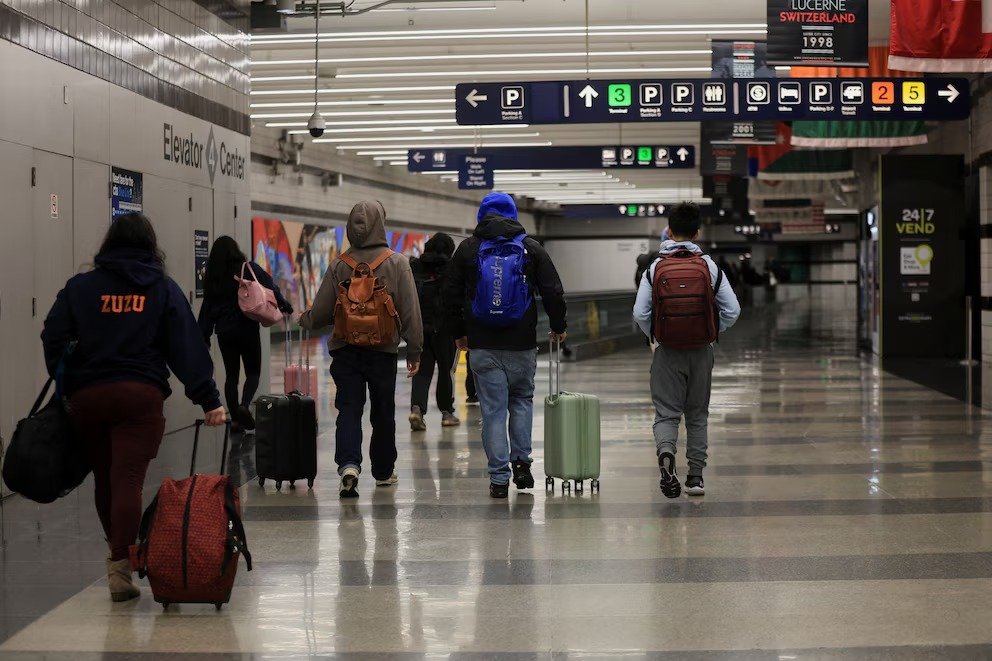
Public health authorities in the United States have confirmed cases of measles exposure at four major international airports during the peak holiday travel period of December 2025, raising concerns amid increased population mobility. The alerts involve passengers and airport staff at Raleigh–Durham, Boston Logan, Newark Liberty and Denver international airports, where individuals infected with the virus were present on specific dates close to the end-of-year festivities.
According to official statements from state health departments and the US Centers for Disease Control and Prevention (CDC), the cases were detected on different days throughout December and communicated through public health advisories. Federal and state agencies have emphasised the importance of epidemiological surveillance and systematic contact tracing, in line with established CDC protocols, to limit further transmission.
Measles is recognised as one of the most contagious infectious diseases and has shown a resurgence in recent years in the United States. CDC figures indicate that, by December 2025, more than 2,000 cases had been reported nationwide, representing a marked increase compared with previous years. The virus spreads primarily through airborne transmission, making enclosed and crowded environments—such as airports—particularly vulnerable during periods of intense travel activity.
State health authorities in North Carolina, Massachusetts, New Jersey and Colorado confirmed that infected individuals passed through Raleigh–Durham International Airport (RDU), Boston Logan International Airport (BOS), Newark Liberty International Airport (EWR) and Denver International Airport (DEN) during December 2025. Each agency released detailed notices specifying the terminals and time windows during which exposure may have occurred, alongside guidance for members of the public who were present at those locations.
In response, the CDC and state health departments urged travellers who were at the affected airports during the indicated times to monitor themselves for symptoms consistent with measles and to seek medical advice promptly if concerns arise. Early signs of infection typically include high fever, cough, runny nose, conjunctivitis and a characteristic rash, which usually appears several days after the onset of fever, according to CDC clinical guidance.
Authorities also highlighted the importance of rapid reporting. Suspected cases should be immediately notified to local health jurisdictions, enabling laboratory confirmation through respiratory swabs and blood tests, as recommended under federal and state diagnostic procedures. Early detection is considered essential to prevent secondary transmission.
The epidemiological situation remains a concern. Official CDC data show that, as of 30 December 2025, the United States had recorded 2,065 measles cases, linked to 49 outbreaks and three deaths resulting from disease-related complications. The majority of infections have occurred among unvaccinated individuals or those with incomplete immunisation histories, prompting renewed public health campaigns stressing the value of vaccination.
Measles poses particular challenges in transport hubs because the virus can remain suspended in the air for up to two hours after an infected person leaves an area. This characteristic significantly increases exposure risk for travellers and airport workers. Health authorities therefore advise individuals who are unsure of their vaccination status to receive the measles, mumps and rubella (MMR) vaccine, which is supported by extensive scientific evidence demonstrating high effectiveness and safety.
Contact tracing efforts in the United States involve coordinated action between state agencies, the CDC and airport operators. Investigations include patient interviews, analysis of travel itineraries and public notifications when exposure occurs in shared spaces. Officials note that information may be updated as inquiries progress and additional contacts are identified.
For travellers and airport personnel, the current situation underscores the importance of maintaining up-to-date immunisation and remaining vigilant for symptoms. Health departments continue to monitor developments closely and reiterate that vaccination remains the most effective tool to prevent measles and reduce the likelihood of further outbreaks during periods of heightened travel.