

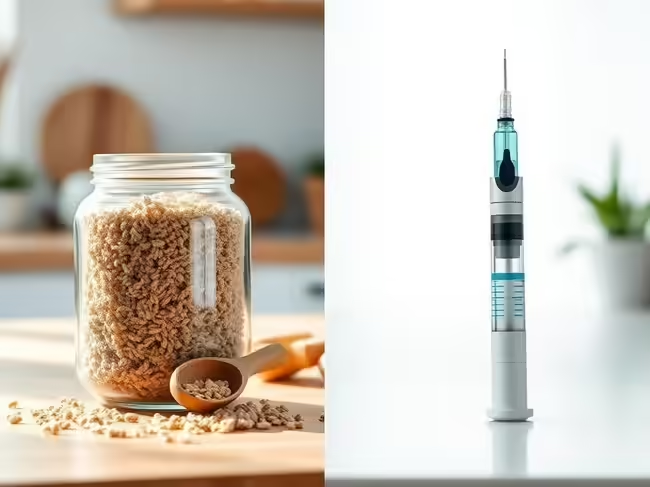
As interest grows in natural approaches to metabolic health, one long-established dietary fibre has returned to the spotlight. In the United States, clinicians and researchers are revisiting the role of psyllium husk, a soluble fibre derived from the seeds of Plantago ovata, amid claims circulating online that it could support weight management while improving cardiovascular health.
Psyllium has been used for decades as a digestive aid, but its relevance has expanded as people search for non-pharmaceutical ways to manage cholesterol levels, blood glucose and appetite. Medical specialists emphasise, however, that its benefits should be understood within a scientific and clinical context, rather than as a rapid solution for weight loss.
Cardiovascular benefits supported by evidence
One of the most consistently documented effects of psyllium is its ability to lower low-density lipoprotein (LDL) cholesterol, often referred to as “bad” cholesterol. When mixed with water in the gut, psyllium forms a viscous gel that binds to bile acids, which are rich in cholesterol. These bound acids are then excreted, prompting the liver to draw additional cholesterol from the bloodstream to produce more bile.
Clinical studies have shown that regular daily intake of psyllium can reduce LDL cholesterol by approximately 6 to 13 per cent. This effect is considered clinically meaningful. In recognition of this evidence, the US Food and Drug Administration (FDA) permits approved health claims on food labels containing sufficient amounts of psyllium fibre, linking its consumption to a reduced risk of heart disease.
Blood sugar regulation and metabolic health
Beyond cardiovascular protection, psyllium also influences how the body handles carbohydrates. Taken with meals, the fibre’s gel-like consistency slows the digestion and absorption of carbohydrates, helping to prevent rapid spikes in blood glucose after eating.
For individuals with type 2 diabetes, or those at elevated risk, this slower glucose release is particularly important. Research indicates that consistent psyllium intake can improve long-term glycaemic markers, including glycated haemoglobin (HbA1c), which reflects average blood sugar levels over several months. By moderating glucose absorption, psyllium may contribute to more stable energy levels and reduced metabolic strain.
Satiety, weight control and the limits of comparison
On social media, psyllium has increasingly been labelled the “natural Ozempic”. Health professionals in the United States caution that this comparison is misleading. Prescription GLP-1 medications, such as Ozempic, act by altering hormonal signalling pathways that regulate hunger and satiety in the brain.
Psyllium, by contrast, works through a physical mechanism. By absorbing water and expanding in the stomach, it slows gastric emptying and increases the sensation of fullness. This may help some individuals reduce overall calorie intake, but it does not produce the substantial weight loss typically observed with pharmacological treatments. Doctors therefore describe psyllium as a supportive dietary habit, not a replacement for prescribed weight-loss therapies.
Digestive health and safe use
Psyllium’s non-fermentable nature makes it particularly effective for bowel regulation. It can soften hard stools by drawing in water, while also adding bulk to loose stools, supporting more regular intestinal function.
Clinicians advise several precautions when introducing psyllium into the diet. Adequate hydration is essential, as the fibre absorbs significant amounts of fluid. Most recommendations suggest starting with a small dose — around 2 to 3 grams per day — and gradually increasing to 7 to 10 grams, depending on individual tolerance. Because psyllium can delay the absorption of certain medications, it is generally recommended to take it at least two hours before or after other medicines.
A complementary, not curative, approach
While psyllium husk offers well-documented benefits for heart health, blood sugar control and digestive function, medical experts stress that it should be viewed as part of a broader lifestyle strategy. Balanced nutrition, physical activity and, where necessary, medical treatment remain central to effective weight and metabolic management.
In the current health landscape of the United States and beyond, psyllium stands out not as a miracle solution, but as a scientifically supported, low-cost dietary tool with meaningful — yet realistic — benefits.