

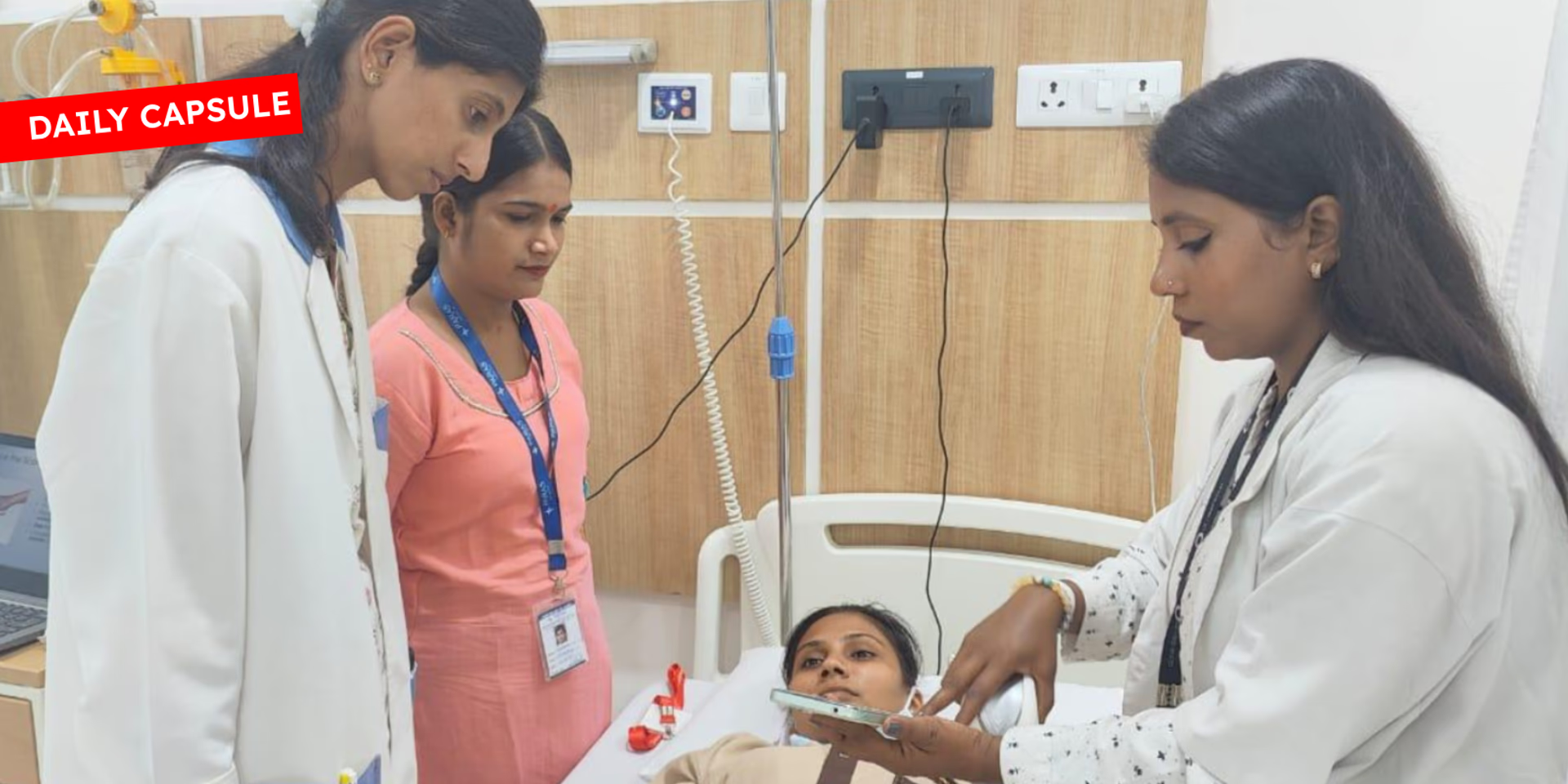

Advancements in breast cancer screening technologies are reshaping early detection strategies in the United Kingdom and globally, as healthcare systems seek more accessible and patient-friendly approaches. With breast cancer remaining one of the most prevalent cancers among women worldwide, improving early diagnosis continues to be a central priority in public health.
Recent developments have focused on creating non-invasive and more comfortable screening methods, particularly for populations that face barriers to traditional diagnostic procedures. Conventional techniques, such as mammography, although effective, can be limited by accessibility issues, cost, and, in some cases, patient discomfort—factors that may discourage routine screening.
Innovative medical devices are now being introduced to complement existing screening programmes. These technologies are designed to detect abnormalities in breast tissue without the need for complex infrastructure, making them particularly relevant in both urban and underserved settings. Research in oncology and medical imaging has consistently emphasised that early detection significantly improves survival rates, with studies indicating that timely diagnosis can reduce mortality by enabling earlier intervention (World Health Organization, 2023).
One of the key advantages of these newer approaches lies in their ability to increase participation in screening programmes. By prioritising ease of use and patient comfort, such tools may help overcome cultural and psychological barriers that often prevent women from seeking preventive care. This is especially important in communities where awareness and access to healthcare services remain limited.
In the United Kingdom, public health authorities have long advocated for regular breast cancer screening as part of national prevention strategies. However, disparities in access and engagement persist, particularly among vulnerable populations. The introduction of alternative screening technologies may support efforts to bridge these gaps and extend preventive care to a broader segment of the population.
Scientific literature also highlights the importance of integrating new diagnostic tools with established clinical pathways. While emerging technologies show promise, they are generally intended to complement—not replace—existing methods such as mammograms and biopsies. Combining multiple diagnostic approaches can enhance accuracy and provide a more comprehensive assessment of patient health.
Beyond technological innovation, experts underline the importance of education and awareness in improving outcomes. Encouraging regular self-examination, promoting understanding of early symptoms, and reducing stigma associated with screening are all critical components of effective cancer control strategies.
As healthcare systems continue to evolve, the integration of innovative screening solutions represents a significant step towards more inclusive and effective cancer care. In both the United Kingdom and other regions, such advancements may contribute to earlier diagnoses, improved patient experiences, and ultimately, better survival outcomes.
Ongoing research and clinical validation will be essential to ensure the reliability and scalability of these technologies. Nevertheless, the current trajectory suggests a promising future in which early breast cancer detection becomes more accessible, efficient and patient-centred on a global scale.