

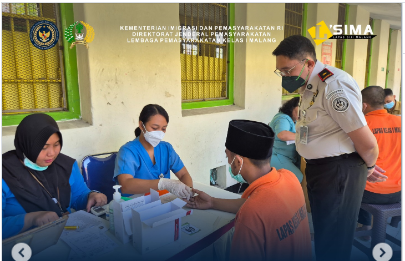

In Indonesia, public health authorities are reinforcing efforts to control infectious diseases by expanding screening initiatives within correctional facilities. A recent programme conducted in the city of Malang highlights a coordinated approach between prison services and local health authorities to deliver comprehensive medical assessments to incarcerated populations.
The initiative involved the deployment of a mobile health clinic providing screening for communicable diseases, including HIV, syphilis, and hepatitis B and C, alongside general health evaluations. Such interventions reflect a growing recognition that prison populations are disproportionately affected by infectious diseases, often due to overcrowding, limited access to healthcare prior to incarceration, and increased vulnerability to transmission.
According to the World Health Organization (WHO), people in custodial settings face a higher burden of infectious diseases compared to the general population, making early detection and treatment essential components of public health strategy. Screening programmes within prisons not only benefit individual health outcomes but also contribute to broader disease control by reducing transmission both داخل facilities and upon reintegration into the community.
In the Indonesian context, the programme implemented in Malang brought together healthcare professionals from the municipal health department to conduct systematic testing and provide health education. Approximately 200 individuals underwent examinations, demonstrating the feasibility of organised, large-scale screening within a controlled environment.
Beyond diagnostic services, the initiative placed strong emphasis on health literacy. Educational sessions were delivered to raise awareness about prevention, transmission routes, and the importance of regular testing. Evidence from public health research suggests that combining screening with education can significantly improve long-term outcomes, as individuals are more likely to engage in preventive behaviours and seek timely medical care.
Healthcare provision in correctional settings is increasingly recognised as a fundamental human right. International guidelines, including those outlined by the United Nations Standard Minimum Rules for the Treatment of Prisoners (the Nelson Mandela Rules), stress that detainees should have access to healthcare services equivalent to those available in the wider community.
The Indonesian programme also underscores the importance of intersectoral collaboration. By aligning correctional institutions with local health departments, authorities can ensure continuity of care, facilitate access to treatment, and establish routine monitoring systems. Such partnerships are critical for sustaining long-term improvements in prison health systems.
From a clinical perspective, early identification of infections such as hepatitis and HIV is vital, as both conditions can remain asymptomatic for extended periods while progressively causing significant health complications. Timely diagnosis enables the initiation of antiviral or antiretroviral therapies, which are known to reduce morbidity, mortality, and transmission rates.
Public health experts argue that expanding similar initiatives across Indonesia could play a key role in national disease control strategies. Regular screening, combined with appropriate treatment pathways and ongoing education, may help mitigate the spread of infectious diseases in high-risk environments.
As Indonesia continues to develop its healthcare infrastructure, programmes such as this demonstrate the potential of targeted interventions to address health inequalities. By prioritising early detection and accessible care within vulnerable populations, the country is taking a proactive step towards improving both individual and public health outcomes.