

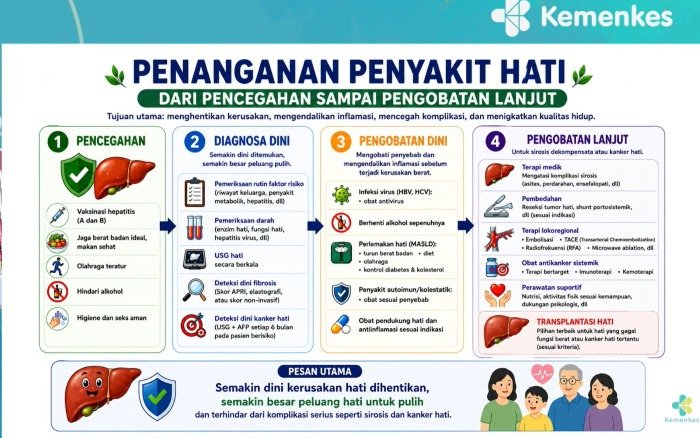

In Indonesia, health authorities are preparing a significant shift in the management of hepatitis, with plans to extend screening, diagnosis, and treatment services to primary healthcare facilities. The initiative reflects growing concern over the burden of chronic liver disease among adults, a demographic that remains insufficiently diagnosed despite progress in childhood immunisation programmes.
According to public health data, hepatitis B and C continue to represent major global health challenges, contributing substantially to liver cirrhosis and hepatocellular carcinoma. The World Health Organization (WHO) has consistently highlighted the importance of early detection and treatment to reduce mortality associated with viral hepatitis. In Indonesia, while vaccination strategies have successfully reduced transmission among infants and children, a considerable proportion of adults remain unaware of their infection status.
To address this gap, Indonesian policymakers are considering revisions to national clinical guidelines to allow earlier-stage diagnosis and treatment initiation at the level of community health centres. This decentralised model is designed to reduce reliance on hospitals, which are expected to focus primarily on complex or advanced cases. Such an approach aligns with international evidence suggesting that strengthening primary care systems can significantly improve outcomes in chronic disease management.
A central component of the strategy involves “task shifting”, a model endorsed in various global health frameworks. This approach allows general practitioners to take on responsibilities traditionally reserved for specialists, particularly in managing uncomplicated cases. Countries such as Thailand have demonstrated the effectiveness of this model, where primary care physicians are trained to diagnose and treat hepatitis in its earlier stages, improving accessibility and reducing delays in care.
In addition to workforce adaptation, the Indonesian plan emphasises the integration of modern diagnostic tools into primary care settings. Advances in medical technology now enable non-invasive assessment of liver health, including biochemical indices such as the AST to Platelet Ratio Index (APRI) and imaging techniques like ultrasonography. These tools facilitate the early identification of liver fibrosis and other complications, which is critical for preventing disease progression.
Research published in journals such as The Lancet Gastroenterology & Hepatology has underscored that timely antiviral treatment can significantly reduce the risk of severe liver outcomes and mortality. However, access to these therapies remains uneven in many regions, often due to limitations in diagnostic capacity and healthcare infrastructure.
To support the implementation of this policy, Indonesian authorities are also exploring incentive mechanisms for healthcare professionals working in primary care. Training programmes aimed at enhancing diagnostic skills and the use of emerging technologies are expected to play a key role in ensuring the effectiveness of the initiative.
Furthermore, a coordinated referral system is being proposed, with specialised hospitals acting as centres of excellence for complex cases while also providing guidance and support to primary care providers. This integrated framework is intended to create a more efficient and responsive healthcare system capable of addressing the full spectrum of liver disease.
Public health experts note that expanding access to hepatitis services at the community level could have a profound impact on disease control in Indonesia. By identifying infections earlier and initiating treatment promptly, the country may reduce long-term complications and improve overall population health outcomes.
As Indonesia advances this policy, it reflects a broader global movement towards decentralised healthcare delivery, where prevention, early diagnosis, and accessible treatment are prioritised as essential components of effective disease control strategies.