

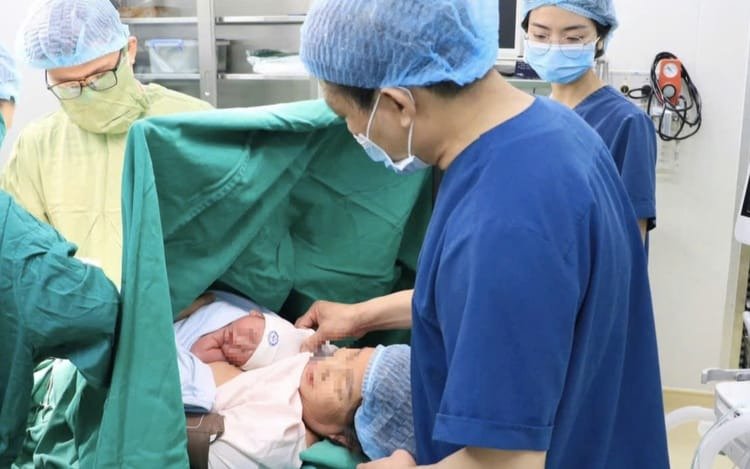

A recent medical case in Vietnam has drawn attention to the evolving possibilities—and inherent risks—associated with assisted reproductive technologies. A 60-year-old woman has delivered a healthy baby following a carefully managed in vitro fertilisation (IVF) pregnancy, illustrating both the capabilities of modern medicine and the clinical challenges of advanced maternal age.
The birth took place in a specialised obstetrics facility in Hanoi, where the patient was admitted during the final stage of pregnancy with a number of pre-existing health conditions. Medical professionals classified the case as extremely high-risk, citing chronic hypertension, insulin-dependent gestational diabetes and a history of prior gynaecological complications.
Pregnancy at an advanced age presents significant physiological demands. According to research published in journals such as The Lancet and Human Reproduction, maternal age above 50 is associated with increased likelihood of cardiovascular complications, pre-eclampsia, haemorrhage and prolonged recovery following delivery. These risks are further amplified when underlying chronic conditions are present, as was the case in this instance in Vietnam.
The pregnancy was achieved through IVF, a technique that has become increasingly accessible worldwide. The British Fertility Society and other international bodies note that while IVF enables conception beyond natural reproductive age, it requires rigorous medical screening and ongoing monitoring to mitigate complications. In older patients, multidisciplinary care is essential, involving obstetricians, endocrinologists and anaesthetists.
Given the elevated risk profile, the delivery was conducted via caesarean section, a common approach in such cases to reduce potential complications during labour. Despite the complexities, the procedure resulted in the birth of a healthy infant, with no immediate complications reported for the newborn.
This outcome reflects broader advancements in reproductive medicine and prenatal care. Improvements in hormonal therapies, embryo selection and maternal monitoring have contributed to increasing success rates in IVF treatments, even among older patients. However, experts caution that such cases remain exceptional and should not obscure the medical realities associated with late-age pregnancies.
The World Health Organization (WHO) continues to emphasise the importance of maternal health optimisation, particularly in high-risk groups. Evidence published in The BMJ also highlights that maternal age is a critical determinant of pregnancy outcomes, reinforcing the need for careful patient selection and personalised care plans.
In Vietnam, this case illustrates both the progress of healthcare systems in managing complex pregnancies and the importance of clinical vigilance. While the successful birth represents a positive outcome, it also serves as a reminder of the delicate balance between medical innovation and patient safety.
As reproductive technologies continue to advance, cases such as this raise important ethical, medical and societal questions regarding the boundaries of assisted conception. Ultimately, ensuring the wellbeing of both mother and child remains the central priority in all such interventions.