

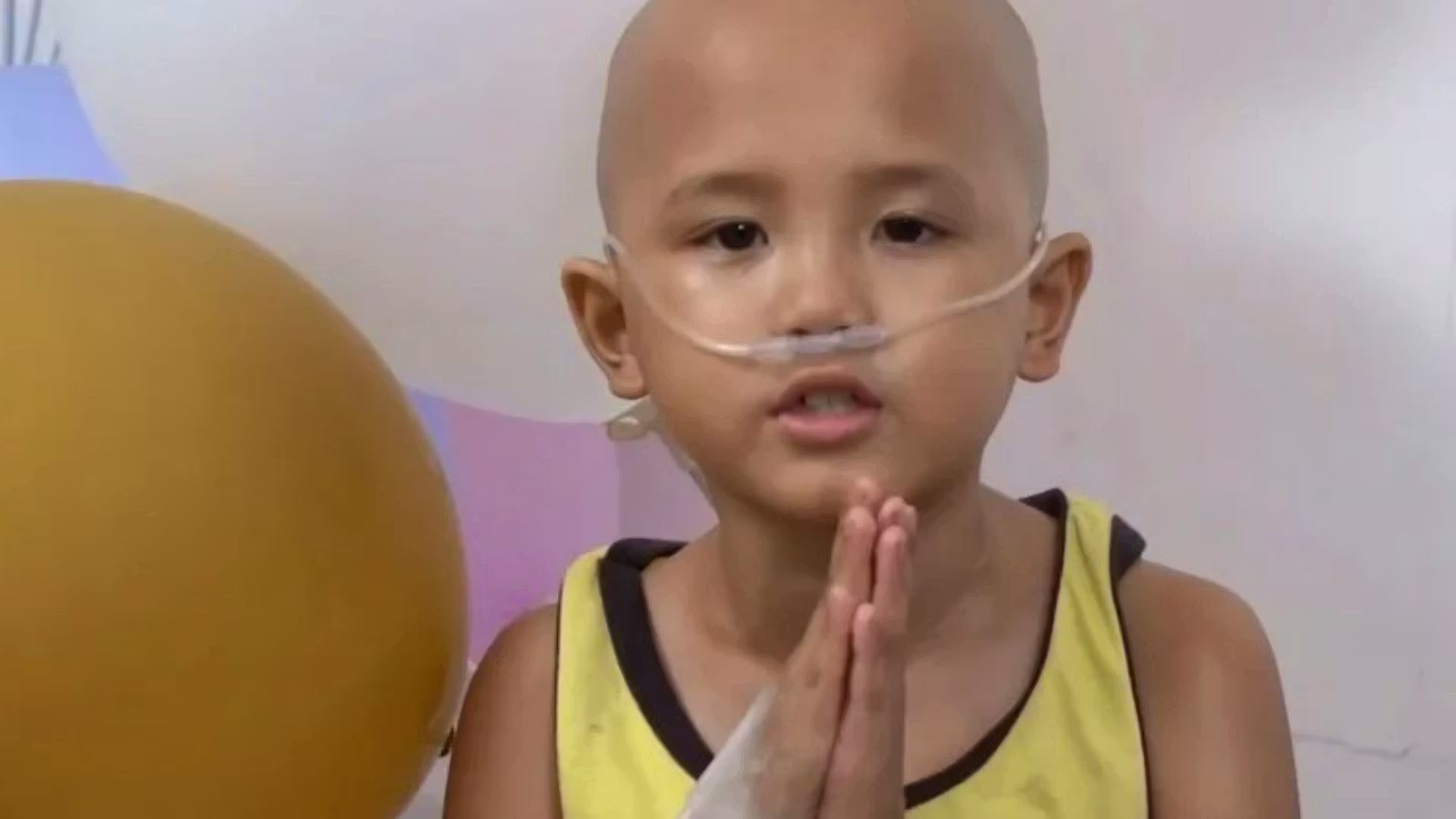
A recent investigation by the BBC World Service has unveiled a disturbing international scheme exploiting children with cancer for financial gain. The operation involves the systematic use of online videos depicting seriously ill children to solicit donations from the public, often without the families receiving adequate support.
In Ghana, a young girl appears in a video pleading, “I do not want to die,” while in the Philippines, seven-year-old Khalil’s mother recounted that he was coerced into crying during filming with menthol and onion applied to his eyes. Promises were made that the resulting donations would fund his treatment. Despite the campaign raising approximately US$27,000, Khalil received no funds, and the video remained online following his death in 2024.
The BBC’s investigation traced similar cases in countries including the Philippines, Colombia, and Ukraine, involving nine families and a total of roughly US$4 million in donations. Families reportedly received only minimal compensation for their participation.
Central to these operations appears to be an organisation named Chance Letikva, allegedly a front company managed by Canadian-Israeli national Erez Hadari. According to former associates, clinics worldwide were contacted with the aim of recruiting children described as “attractive, fair-skinned, and articulate.” Efforts to reach Hadari for comment were unsuccessful.
Olena, a mother from Ukraine whose daughter Viktoriia was featured in one such video, described the exploitation as “despicable” and “dirty money,” highlighting the ethical and emotional violations suffered by families in these campaigns.
Experts in child welfare and digital ethics have increasingly warned that the rise of social media fundraising has created fertile ground for such abuses. “When children’s suffering is commodified online, it is not only morally reprehensible but can cause lasting psychological harm,” notes Dr. Sarah McLeod, a child protection specialist at the University of Edinburgh.
The BBC’s findings underscore the urgent need for international regulatory frameworks to monitor online charitable campaigns and protect vulnerable populations from exploitation. Authorities in multiple countries are now considering stricter oversight of fundraising platforms to prevent further abuse.