

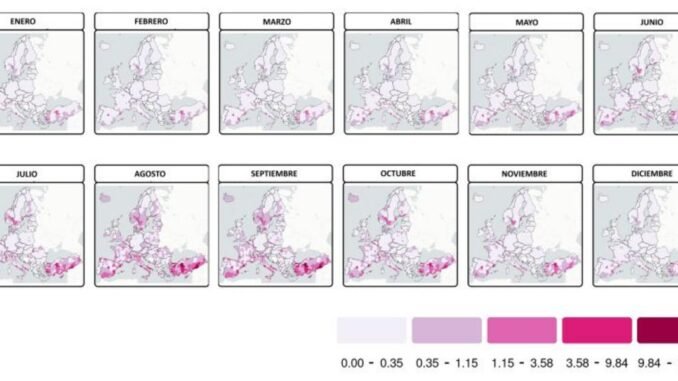

An international scientific study, with participation from research institutions in Spain, has raised concerns about the potential impact of climate change on the global distribution of leptospirosis. The findings suggest that evolving environmental and climatic conditions may significantly increase both the incidence and geographical spread of this zoonotic disease in the coming decades.
Leptospirosis is a bacterial infection transmitted from animals to humans, most commonly through exposure to water or soil contaminated with the urine of infected animals, particularly rodents. The disease has long been associated with tropical and subtropical regions, where warm temperatures and high rainfall create favourable conditions for bacterial survival. However, researchers involved in the study, including contributors from Spain, indicate that this pattern may be shifting.
The analysis points to climate-related factors—such as rising temperatures, increased rainfall, and extreme weather events—as key drivers that could facilitate the expansion of the disease into previously unaffected areas. Flooding, for instance, is known to increase human exposure to contaminated water sources, thereby elevating the risk of infection. According to existing epidemiological evidence (Haake & Levett, Current Topics in Microbiology and Immunology, 2015), environmental conditions play a critical role in the persistence and transmission dynamics of Leptospira bacteria.
One of the central conclusions of the study is that leptospirosis may no longer remain confined to traditionally high-risk regions. Instead, it is expected to extend geographically and occur over longer seasonal periods, potentially affecting populations in parts of Europe, including Spain. This projected redistribution highlights the need for adaptive public health strategies in countries that have not historically faced a high burden of the disease.
Clinically, leptospirosis can present with a wide range of symptoms, from mild flu-like manifestations—such as fever and muscle pain—to severe complications, including liver and kidney failure. In its most serious forms, the disease can become life-threatening if not promptly diagnosed and treated. The variability in symptoms can complicate early detection, reinforcing the importance of awareness among healthcare professionals and the general population.
The study also underscores the importance of adopting integrated health approaches, particularly the “One Health” framework, which links human, animal, and environmental health. Countries lacking such coordinated strategies may be more vulnerable to emerging zoonotic threats. Public health experts in Spain involved in the research emphasise that strengthening surveillance systems, improving environmental monitoring, and enhancing collaboration between sectors will be essential in mitigating future risks.
Institutions in Spain, including national epidemiology and public health research centres, contributed to the study’s findings, reinforcing the country’s role in global health research efforts. The researchers advocate for continued investigation and international cooperation to better understand how climate change may influence infectious disease patterns worldwide.
As climate dynamics continue to evolve, the study serves as a timely reminder that infectious diseases are increasingly shaped by environmental factors. Proactive planning and evidence-based policies will be crucial to addressing the growing challenges posed by zoonotic diseases such as leptospirosis on a global scale.