

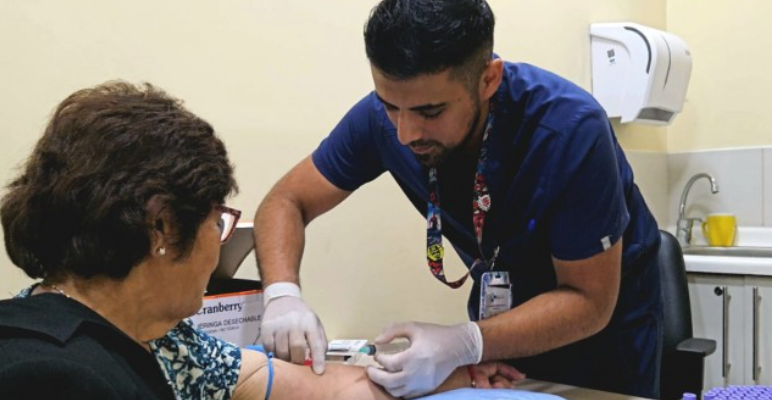
Health authorities in Chile have implemented a new blood-based screening strategy in the southern Magallanes Region, an area that records some of the highest rates of digestive cancers in the country. The initiative, led by the Servicio de Salud Magallanes, introduces the Gastropanel, a laboratory test designed to assess risk factors associated with gastric cancer through the measurement of specific serum biomarkers.
Gastric cancer remains one of the leading causes of cancer-related mortality in Chile, with particular concern in Magallanes, where incidence rates are reported to exceed the national average. Regional data indicate that digestive malignancies account for a significant proportion of oncological deaths, prompting authorities to strengthen early detection strategies.
A Laboratory-Based “Map” of Gastric Mucosal Health
The Gastropanel test operates through a lateral flow-based analysis of four key biomarkers obtained from a simple blood sample. Unlike endoscopy, it does not require sedation or invasive instrumentation. Instead, it provides an indirect biochemical assessment of the structure and functional state of the gastric mucosa.
The four biomarkers analysed include:
Helicobacter pylori IgG antibodies, indicating exposure to H. pylori, a bacterium classified by the World Health Organization as a Group 1 carcinogen and recognised as a principal risk factor for gastric carcinoma.
Pepsinogen I and Pepsinogen II, which serve as indicators of inflammation or atrophic changes in the gastric body. Reduced pepsinogen I levels relative to pepsinogen II have been associated with gastric atrophy in epidemiological studies.
Gastrin-17, a hormone reflecting antral function and gastric acid secretion.
Peer-reviewed research published in journals such as Alimentary Pharmacology & Therapeutics and Scandinavian Journal of Gastroenterology has examined serum pepsinogens and gastrin-17 as non-invasive markers of atrophic gastritis, a recognised precursor lesion in the Correa cascade of gastric carcinogenesis.
Addressing a Regional Public Health Burden in Chile
According to regional health data in Chile, approximately 750 new oncological cases are diagnosed annually in Magallanes, with digestive cancers representing a substantial proportion of malignant tumours. Notably, the region reports a comparatively higher incidence among younger populations than other parts of Chile, intensifying the urgency of early detection.
By incorporating Gastropanel testing into routine screening pathways, the Servicio de Salud Magallanes aims to triage patients more effectively. Individuals identified as high risk can be prioritised for diagnostic endoscopy, thereby reducing pressure on waiting lists and ensuring timely intervention for those most in need.
To accelerate implementation, the regional health service has organised dedicated weekend clinics, inviting groups of patients for blood sampling. Attendance rates have reportedly been high, reflecting strong community engagement with preventive healthcare initiatives.
Early Identification of Pre-Cancerous Lesions
One of the principal objectives of the programme in Chile is the early detection of atrophic gastritis and other pre-malignant alterations. Chronic infection with Helicobacter pylori has long been associated with progressive gastric mucosal damage, which, if untreated, may evolve into dysplasia and carcinoma.
International consensus guidelines, including the Maastricht recommendations for the management of H. pylori, emphasise the importance of identifying and eradicating infection to reduce gastric cancer risk. Non-invasive biomarker panels may therefore serve as an intermediary screening tool, particularly in high-incidence regions such as Magallanes.
Complementing — Not Replacing — Endoscopy
Health officials in Chile stress that the blood test does not replace diagnostic endoscopy, which remains the gold standard for visual inspection and biopsy of suspicious lesions. Rather, it functions as a first-line stratification instrument, enabling clinicians to allocate resources more efficiently.
By combining laboratory-based risk assessment with targeted endoscopic evaluation, Chile’s southern region seeks to strengthen its response to one of its most pressing oncological challenges.
As public health systems worldwide explore cost-effective cancer screening models, the experience in Magallanes, Chile, may provide valuable insight into how biomarker-driven strategies can support earlier diagnosis and potentially improve survival outcomes in high-risk populations.