


By the International Affairs Desk | London
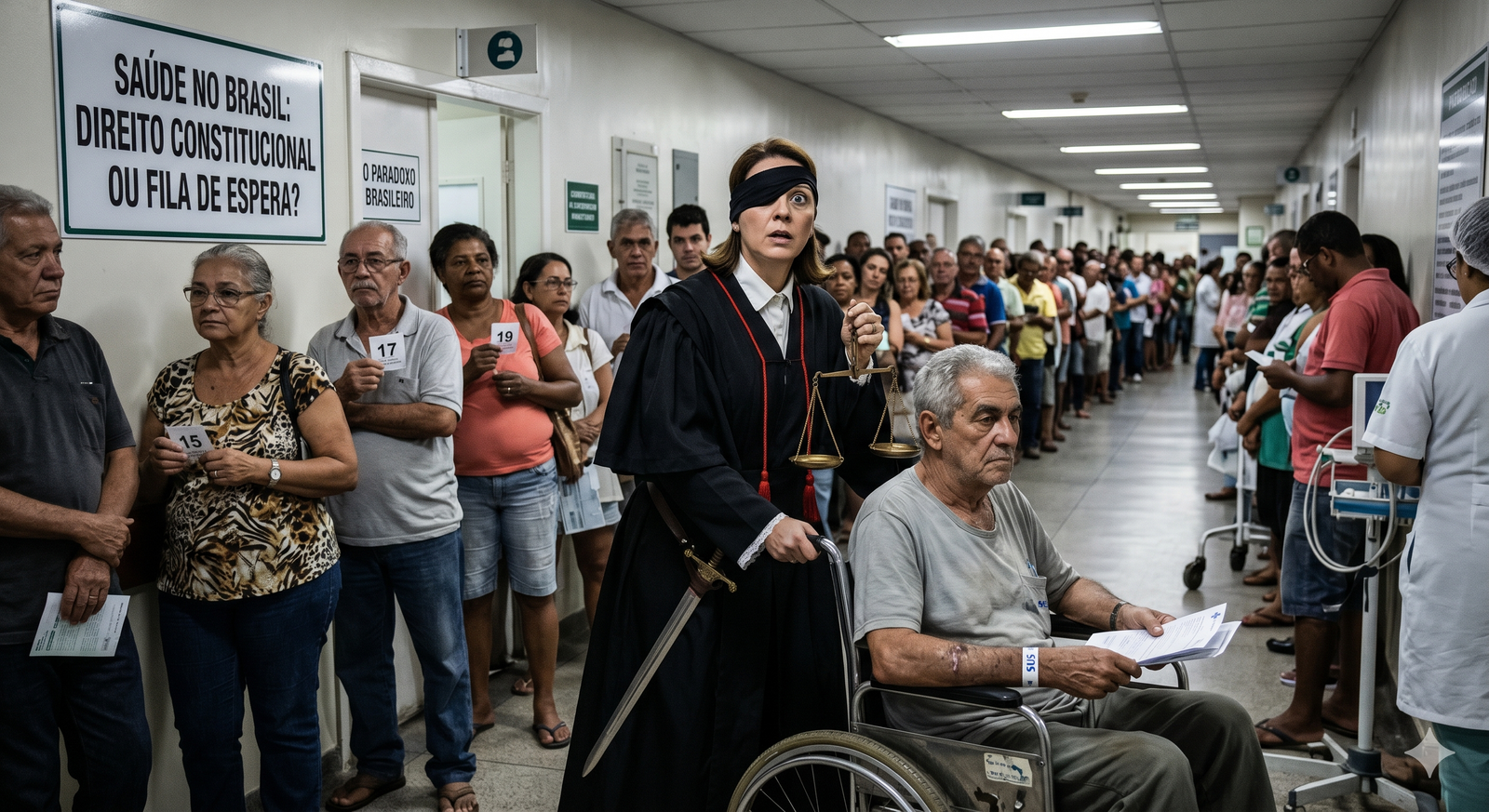
Brazil is frequently cited as one of the most ambitious public healthcare experiments ever undertaken. With a population exceeding 200 million people and a territory comparable in size to a continent, the country operates the Sistema Único de Saúde (SUS), a universal healthcare system established by the Federal Constitution of 1988 and available to every citizen without direct cost at the point of care.
For public health specialists around the world, the achievement is remarkable. Few nations have attempted to provide universal healthcare on such a scale. Fewer still have done so while facing profound regional inequalities, enormous geographic distances and the economic challenges typical of developing countries.
The Brazilian model has become an international reference, particularly among nations seeking to expand healthcare access without adopting entirely private systems. Yet behind the scale and ambition of the SUS lies a contradiction that has become increasingly difficult to ignore. Brazil successfully transformed healthcare into a constitutional right. The challenge now is ensuring that this right is delivered at the speed required by medicine.
A COUNTRY WITH DEVELOPED-WORLD TAXATION LEVELS
In 2025, Brazil's total tax collection across federal, state and municipal governments approached R$ 4 trillion. The country's tax burden reached approximately 32.4 percent of Gross Domestic Product, a level comparable to several developed economies. The numbers reveal an important reality. Brazil is not a low-tax nation. Its level of public revenue resembles that of countries with far more mature healthcare infrastructures.
The difference appears in how healthcare funding is distributed. Brazil invests approximately 4.7 percent of its GDP directly in public healthcare. By comparison, the United Kingdom allocates approximately 9.1 percent of GDP to the National Health Service. Japan invests close to 9 percent.
Even the United States, despite operating a predominantly private healthcare model, spends the equivalent of approximately 8.5 percent of GDP through public programmes such as Medicare and Medicaid. This disparity helps explain one of the central tensions within Brazilian healthcare policy.
While the country collects taxes at levels similar to developed economies, its universal healthcare system operates with significantly lower public investment relative to demand.
The consequences are visible throughout the country.
Specialist shortages.
Delayed consultations.
Diagnostic backlogs.
Postponed surgeries.
Lengthy waiting lists.
Growing dependence on judicial intervention.
THE COST OF WAITING
Waiting is not merely an administrative issue. In medicine, time often determines outcomes. A condition identified early may be treated successfully.
The same condition, left untreated for months or years, may evolve into permanent disability or require substantially more complex intervention. Healthcare systems around the world face waiting lists.
The United Kingdom's NHS has experienced significant pressure in recent years.
Canada, France and other nations with universal healthcare models continue to confront similar challenges.
Brazil's situation, however, presents a unique complexity.
The country lacks comprehensive national mechanisms capable of measuring the full impact of delayed treatment on patient outcomes.
Appointments are counted.
Examinations are counted.
Procedures are counted.
What remains largely unmeasured is what happens to patients while they wait.
How many conditions worsen?
How many opportunities for early intervention are lost?
How many disabilities become permanent?
How many deaths occur after months or years awaiting care?
The answers remain elusive.
In the southern state of Rio Grande do Sul, official data obtained through transparency laws revealed that 2,434 people died between 2023 and 2024 while waiting for specialist consultations within the public healthcare system.
Health authorities correctly note that it is impossible to establish direct causation between every death and delayed medical treatment. Nevertheless, the figures expose a broader problem. The system can measure the queue. It cannot fully measure the consequences of remaining in it.
A CHALLENGE THAT EXTENDS BEYOND PUBLIC HEALTHCARE
One of the most misunderstood aspects of Brazil's healthcare crisis is the belief that it affects only those who depend upon the public system.The reality is considerably broader. Brazil possesses one of the largest private health insurance markets in the world.
Millions of citizens pay monthly premiums specifically to avoid delays and secure faster access to medical care. Yet judicial intervention has become increasingly common among privately insured patients as well.
Disputes involving denied treatments, restricted coverage, refused medications, postponed procedures and disagreements over contractual obligations routinely reach Brazilian courts.
As a result, healthcare litigation has become a defining feature of both public and private healthcare. Patients dependent upon the State frequently seek judicial orders to obtain treatments that should already be available through public policies. Patients covered by private insurance often seek judicial orders to enforce benefits they believe are already guaranteed under their contracts.
The legal disputes differ.
The practical outcome is frequently the same.
Healthcare becomes dependent upon litigation.
This transforms healthcare from a public administration issue into a broader social challenge affecting virtually every socioeconomic group in the country.
TWO CASES CURRENTLY DRAWING NATIONAL ATTENTION
Two recent cases currently unfolding in southern Brazil help illustrate the broader challenges facing healthcare delivery in the country. The first involves the coastal city of Balneário Camboriú, one of Brazil's wealthiest municipalities and internationally known for its luxury real estate market, high-rise skyline and concentration of wealth along the southern coastline.
In May 2026, Brazil's Supreme Court reaffirmed a long-established constitutional principle when it upheld a decision requiring the municipality to provide a respiratory support device to a patient through the public healthcare system. Municipal authorities had argued that responsibility for the equipment belonged to another level of government.
The Court rejected that argument and once again reinforced the doctrine that healthcare obligations are shared among federal, state and municipal authorities. The ruling highlighted a recurring problem within Brazil's healthcare system.
While government entities debate administrative responsibilities, patients often remain dependent upon judicial intervention to secure treatments already recognised as medically necessary. The second case is unfolding approximately 250 kilometres south, in the small seaside municipality of Xangri-Lá. The name may sound familiar to British readers.
It derives from Xangri-Lá, the fictional utopian valley described in James Hilton's 1933 novel Lost Horizon, a place associated with peace, harmony, wellbeing and longevity.
The reality emerging from court records in the Brazilian municipality presents a far less idyllic picture. According to documents filed in ongoing judicial proceedings, medical evaluations identified the need for cervical spine surgery in 2023. The procedure was not performed.
Subsequent examinations, conducted years later, reportedly documented disease progression and the emergence of irreversible degenerative complications.
The case has become emblematic of what Brazilians commonly refer to as the "SUS queue", the waiting lists that regulate access to consultations, examinations and specialised procedures within the public healthcare system. The existence of waiting lists is not unique to Brazil.
Similar mechanisms exist throughout Europe, including within the United Kingdom's NHS. What makes the case noteworthy is the apparent contrast between the documented progression of the patient's condition and the continued absence of definitive treatment.
Health specialists broadly recognise that degenerative diseases tend to worsen over time and that delayed intervention may reduce treatment effectiveness while increasing future healthcare costs.
Court records further indicate ongoing disputes regarding the implementation of judicial orders issued during the course of the proceedings. The case remains active, and any legal responsibilities will ultimately be determined by the competent authorities. Even so, the facts already documented raise important public policy concerns.
How should healthcare systems prioritise patients whose conditions are medically documented as progressive and potentially irreversible? What safeguards exist to prevent urgent cases from becoming trapped in administrative waiting lists? And how should governments account for the human and financial consequences of delayed intervention?
These questions extend far beyond a single municipality.
The Xangri-Lá case has inspired a journalistic investigation and a special reporting series in Brazil examining healthcare delays, judicial intervention and patient outcomes. Future reports will explore additional cases, including documented situations in which court decisions arrived only after the death of the patient involved.
A MODEL WORTH DEFENDING, A PROBLEM THAT CANNOT BE IGNORED
Brazil deserves recognition for attempting something many nations have never achieved. The country constitutionally guaranteed healthcare to an entire population and built a system capable of serving hundreds of millions of people. That achievement remains significant. It also remains incomplete.
The challenge facing Brazil today is no longer whether healthcare should be considered a right. That debate was settled decades ago. The challenge is ensuring that constitutional guarantees become timely medical care.
The challenge is preventing administrative delays from becoming clinical deterioration. The challenge is ensuring that legal victories arrive before irreversible damage occurs. The challenge is transforming access on paper into access in practice.
For international observers, Brazil remains an important healthcare laboratory. Its successes offer lessons for countries seeking universal coverage. Its failures offer equally important warnings. Because healthcare systems are ultimately judged not by the rights they promise, but by the care they deliver.
And for thousands of Brazilians still waiting for consultations, examinations, surgeries and treatments, the most important measure of any healthcare system remains the same.
Not whether care exists.
But whether it arrives in time.