

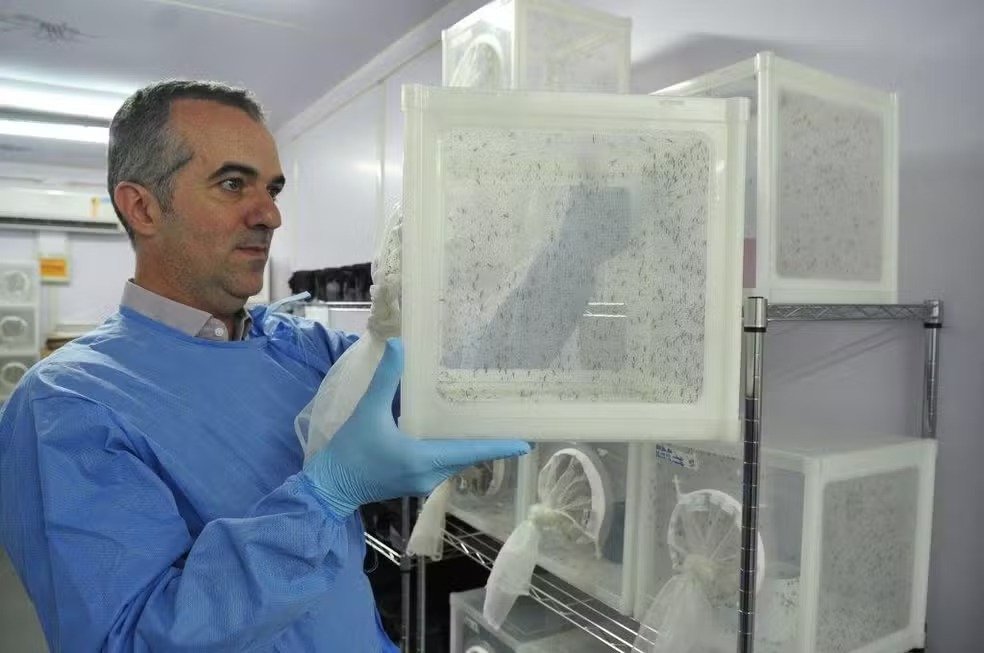
Brazil — A Brazilian scientist has been acknowledged among the ten individuals who reshaped global science in 2025, according to the internationally respected journal Nature. The recognition honours the long-term public health impact of his work on controlling mosquito-borne diseases in Brazil, where dengue, Zika and chikungunya have posed a persistent threat for decades.
Dr Luciano Moreira, affiliated with the renowned Oswaldo Cruz Foundation (Fiocruz), has spent 17 years refining a biological strategy that prevents the Aedes aegypti mosquito from spreading viral infections. His approach centres on the bacterium Wolbachia, naturally present in many insects, which, when introduced into Aedes aegypti, disrupts viral replication inside the mosquito. As a result, the insects remain alive but lose much of their ability to transmit dengue and related illnesses to humans.
Recent studies conducted in Brazil highlighted that Wolbachia-infected mosquito populations have produced substantial public health benefits. In municipalities where the strategy was applied, dengue incidence dropped significantly — with recorded declines reaching as much as 89%, according to research published in The Lancet.
Dr Moreira reported that the recognition was emotionally meaningful and symbolised the value of Brazilian scientific innovation, stating that witnessing the reduction of hospitalisations and deaths brings him “great satisfaction”. In a country where over 1,700 people lost their lives to dengue this year alone, the achievement represents a critical advancement for national health strategies.
How the technique functions
The mosquito laboratory programme begins by introducing Wolbachia into Aedes aegypti eggs. Once established, the bacterium occupies the cells of the developing insects. Since arboviruses — such as dengue or Zika — must replicate inside the mosquito to be transmitted, the presence of Wolbachia obstructs that replication. Importantly, Wolbachia is maternally inherited, enabling infected female mosquitoes to pass the bacterium to their offspring. This natural transmission means the effect spreads through subsequent generations without repeated releases, reducing intervention cost and maximising long-term sustainability.
Scaling the intervention
Dr Moreira now oversees what is considered the world’s largest mosquito production complex, based in Curitiba, Brazil. Millions of Wolbachia-carrying mosquitoes are produced and dispersed to cities nationwide through a collaboration with the Brazilian Ministry of Health. Currently, the enhanced insects are active in 16 urban locations.
A 2025 publication in The Lancet reported that across affected regions, dengue rates fell by an average of 63%, reflecting promising outcomes for disease burden reduction and demonstrating a potential blueprint for similar initiatives in other tropical countries.
A milestone for Brazilian research
Dr Moreira stresses that Brazil possesses exceptional scientific capacity but faces chronic underinvestment. He highlighted that creativity and resourcefulness have often compensated for funding constraints in research laboratories, suggesting that with stronger financial backing, national science could achieve rapid advancements.
Context among global innovators
His inclusion in the Nature list places his work alongside other landmark scientific achievements of 2025, including breakthroughs in neurological therapy in the United Kingdom, genetic editing success in the United States, and deep-sea ecological discoveries in China. These recognitions illustrate a worldwide shift towards research aimed at solving urgent human challenges — from pandemics to rare genetic disorders.
As Brazil continues combating rising dengue cases intensified by climate change, the Wolbachia-based intervention may offer one of the country’s most promising long-term defences. For public health researchers globally, it represents a compelling example of biologically grounded control strategies capable of altering disease trajectories without ecological harm.