

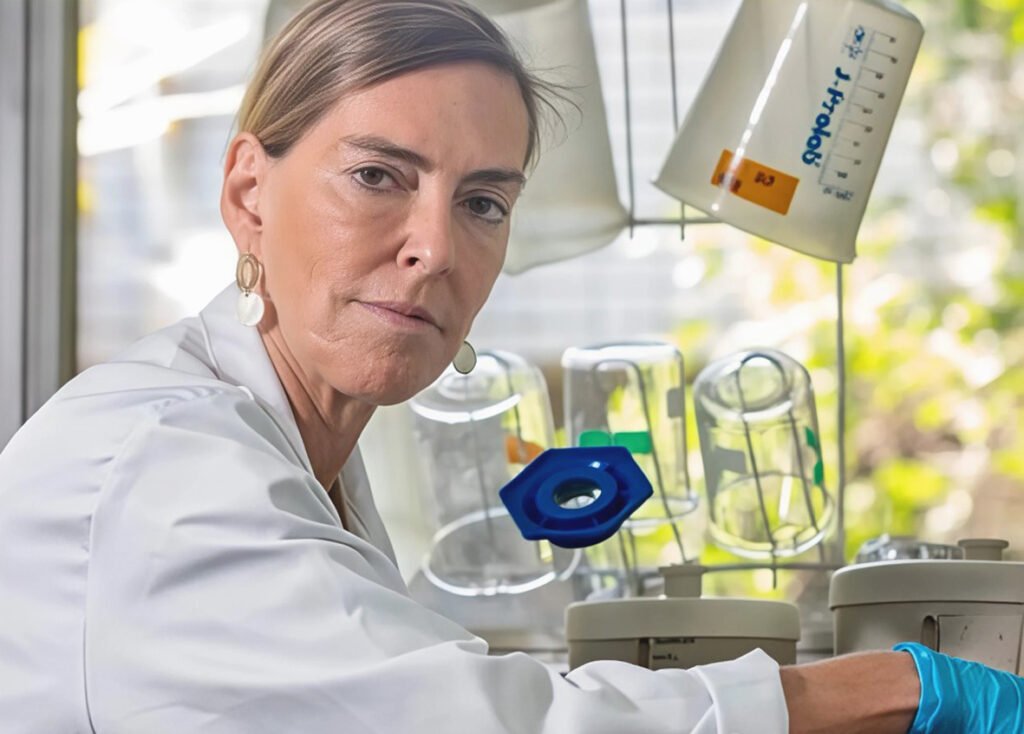
In Brazil, a major scientific advance in spinal cord injury research has drawn international attention after six quadriplegic patients regained the ability to walk following an experimental treatment developed by Brazilian neuroscientist Tatiana Coelho de Sampaio.
Professor Sampaio, an associate professor at the Universidade Federal do Rio de Janeiro (UFRJ) and head of the Laboratory of Extracellular Matrix Biology at the institution’s Institute of Biomedical Sciences, has dedicated nearly three decades to studying the regenerative potential of the central nervous system. Her work centres on overcoming one of medicine’s most enduring challenges: repairing spinal cord damage once considered irreversible.
Rethinking Irreversible Paralysis
Spinal cord injuries have historically been viewed as permanent due to the limited capacity of central nervous system neurones to regenerate after trauma. When neural pathways are disrupted, the body’s intrinsic repair mechanisms are typically insufficient to restore lost motor and sensory function. This biological limitation has left millions worldwide living with permanent paralysis.
Professor Sampaio’s research challenges this long-standing paradigm. Her team developed an experimental compound known as polylaminin, a laboratory-engineered protein designed to stimulate neuronal reconnection within damaged spinal tissue. The molecule is derived from proteins extracted from the human placenta and is applied directly to the site of injury.
Laminin proteins are known, from developmental neurobiology research, to play a critical role in guiding neuronal growth and synaptic formation during embryonic development. By mimicking this natural mechanism, polylaminin aims to reactivate regenerative pathways within injured adult spinal cords.
Clinical Outcomes That Surprised the Scientific Community
According to data released by the Brazilian research team, six individuals diagnosed with severe spinal cord injuries, including tetraplegia, experienced significant recovery of both mobility and sensory perception after receiving the treatment. In some cases, patients who had long been considered permanently paralysed regained the ability to stand and walk.
Although the therapy remains experimental and subject to regulatory review in Brazil, the early human trial results have been described as highly encouraging within the global neuroscientific community. The findings place Brazilian biomedical research at the forefront of regenerative medicine discussions.
Independent scientific literature has long emphasised the importance of extracellular matrix components in neural repair, and Sampaio’s work builds upon decades of foundational research in molecular neurobiology. By translating these biological principles into clinical application, the Brazilian team has bridged a gap between laboratory science and patient-centred outcomes.
Regulatory Pathways and Future Prospects
Despite the promising results, the treatment has not yet received authorisation for widespread clinical use. Further multi-centre trials, long-term follow-up studies, and regulatory assessment will be required before polylaminin could become part of standard therapeutic protocols in Brazil or internationally.
Nevertheless, the breakthrough has elevated Brazil’s profile in the field of spinal cord regeneration and has prompted discussion about the broader implications for neurological rehabilitation. For patients living with paralysis, the research represents renewed hope grounded in measurable clinical evidence.
A Landmark Moment for Brazilian Medical Science
Professor Sampaio’s decades-long commitment underscores the cumulative nature of scientific progress. Her leadership at UFRJ highlights the role of Brazilian public research institutions in advancing global health innovation.
While speculation regarding major international awards remains premature, the clinical outcomes achieved in Brazil mark a significant milestone in regenerative medicine. If subsequent trials confirm these early findings, polylaminin could redefine therapeutic expectations for spinal cord injury worldwide.
For millions affected by paralysis, what was once considered biologically impossible may no longer be beyond reach.