

A new study conducted in the United States indicates that artificial intelligence (AI) may be capable of identifying early risk signals for more than 130 diseases by analysing physiological data collected during a single night of sleep. The research, led by scientists at Stanford University and published in the peer-reviewed journal Nature Medicine, highlights the growing role of sleep science in predictive and preventive medicine.
The AI system, known as SleepFM, was designed to interpret complex biological signals recorded during overnight sleep studies, including brain activity, heart rhythm and breathing patterns. According to the researchers, the model can estimate the likelihood of developing conditions such as Parkinson’s disease, dementia, myocardial infarction, heart failure, and several forms of cancer, often years before clinical symptoms emerge.
How Sleep Becomes a Source of Medical Insight
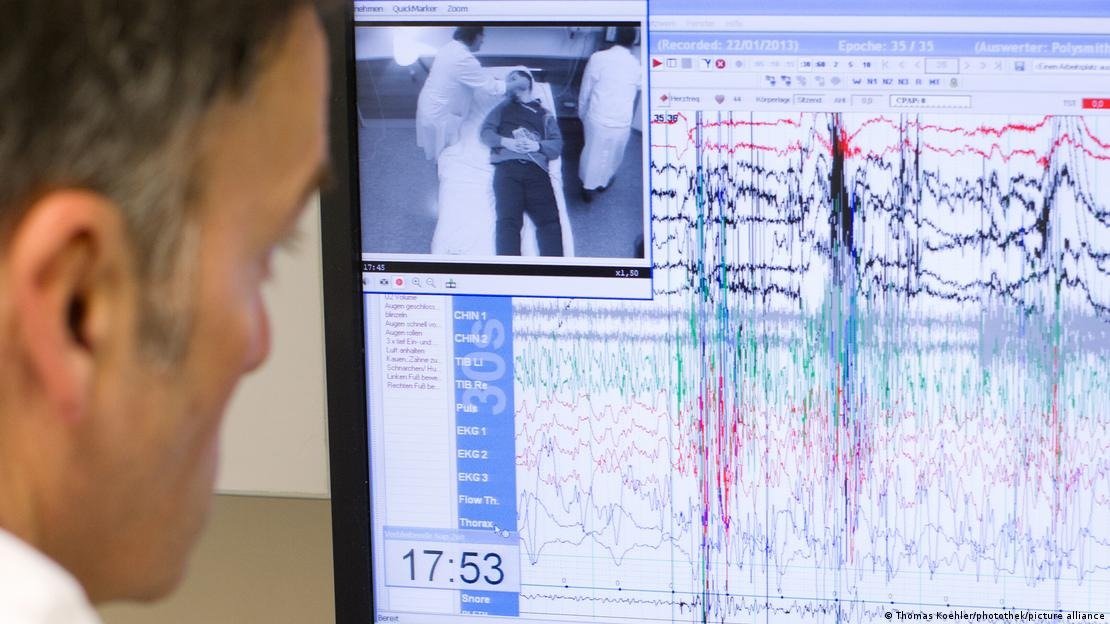
SleepFM was trained using data obtained through polysomnography, the standard laboratory method for comprehensive sleep assessment. This technique simultaneously records electrical brain activity, eye movements, muscle tone, cardiac signals and respiratory function.
The development team analysed approximately 585,000 hours of sleep recordings from around 65,000 individuals, primarily drawn from sleep laboratories affiliated with Stanford’s Sleep Medicine Centre in the United States. During its initial training phase, the AI learned how different physiological systems interact during normal sleep, effectively building a statistical representation of what researchers describe as a “biological sleep language”.
Following this foundational training, the model was refined to perform specific diagnostic tasks, such as identifying sleep stages and detecting sleep apnoea. Its performance was found to be comparable to established analytical tools like U-Sleep and YASA, which rely heavily on electroencephalogram (EEG) data.
Predictive Accuracy and Disease Associations
From over 1,000 possible diagnostic categories, SleepFM demonstrated moderate to high predictive accuracy for 130 medical conditions. The strongest predictive associations were observed for neurodegenerative disorders, cardiovascular disease, certain cancers, and overall mortality risk.
The researchers stress, however, that the system does not determine disease causation. Instead, it identifies statistical correlations between sleep patterns and later health outcomes. This distinction is crucial, as correlation alone cannot establish whether sleep abnormalities contribute directly to disease development or merely reflect underlying biological changes.
Strengths and Limitations of the Evidence
One important limitation acknowledged by the authors is that the training data largely originated from individuals already referred for sleep evaluation, typically from regions with advanced healthcare infrastructure. As a result, populations without diagnosed sleep disorders or those from economically disadvantaged areas remain underrepresented.
Independent validation studies are currently underway, but experts caution that broader and more diverse datasets will be necessary before such models can be widely generalised or integrated into routine clinical care.
Clinical Potential Without Replacing Medical Judgement
Specialists in medical informatics emphasise that AI systems like SleepFM should be viewed as decision-support tools rather than diagnostic authorities. By condensing vast amounts of complex sleep data into compact numerical representations, AI can assist clinicians in identifying patterns more efficiently and consistently than manual analysis alone.
Nevertheless, the responsibility for diagnosis and treatment decisions continues to rest firmly with healthcare professionals. Researchers involved in the study underline the importance of interdisciplinary collaboration, noting that while AI can highlight risk patterns, human expertise remains essential for interpretation, context and ethical clinical decision-making.
A Step Towards Earlier Detection
The findings from the United States reinforce growing scientific interest in sleep as a window into long-term health. While further research is required to confirm clinical applications, the study suggests that overnight sleep analysis may one day play a meaningful role in early disease risk assessment, complementing traditional medical screening methods rather than replacing them.