

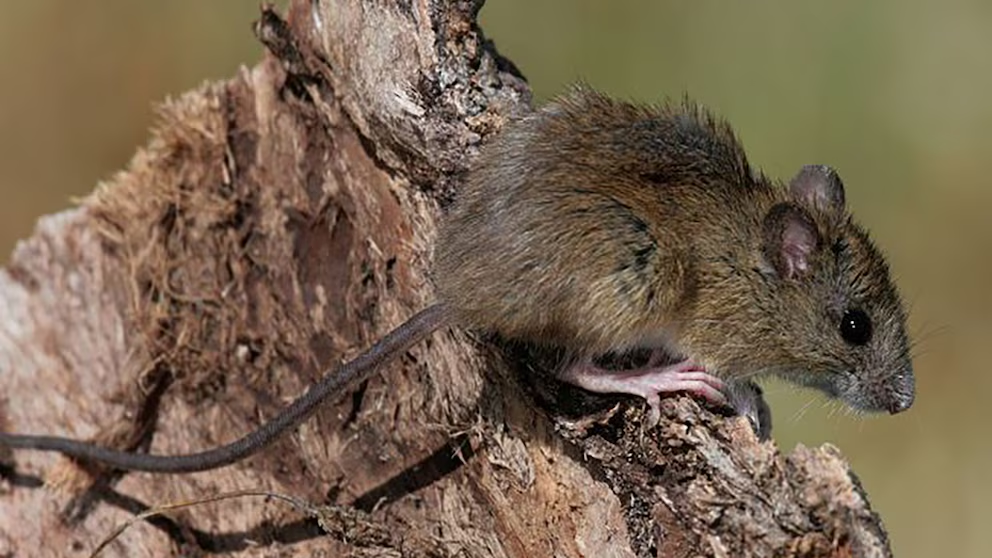
Buenos Aires, Argentina – Health authorities in Argentina have issued an epidemiological alert after hantavirus cases recorded between July and December 2025 reached the national critical threshold. According to the latest National Epidemiological Bulletin, the country confirmed 86 cases throughout 2025, including 28 deaths, resulting in a case fatality rate of 33.6%. The current season shows a persistent upward trend, particularly in rural settings and in the province of Buenos Aires.
Official data indicate that 52 cases were reported during the second half of the year alone, exceeding figures observed in previous seasons. This increase led the Ministry of Health of the Nation to strengthen epidemiological surveillance and rapid response measures across several provinces. The bulletin also highlights that the highest incidence of hantavirus infection in Argentina typically occurs between September and April, coinciding with peak seasonal activity.
Regional distribution and outbreak zones
The central region of Argentina, comprising Buenos Aires, Santa Fe and Entre Ríos, has entered an outbreak phase during the 2025–2026 season. The most recent public health emergency was declared in the municipality of General Belgrano, Buenos Aires province, following the death of a 10-year-old child. Additional fatalities were reported in Mar del Plata, San Andrés de Giles and Chacabuco, according to municipal authorities and the Argentine Integrated Health Information System.
In contrast, the north-western provinces of Salta and Jujuy reported case numbers within historical limits, while infections were also identified in the Patagonian Forests region in southern Argentina. Within the central area, the highest concentration of cases was detected in the Paraná Delta and Islands and in the Samborombón wetlands, environments known to favour contact between humans and wild rodent populations.
Clinical profile and populations at risk
Hantavirus is an emerging viral zoonosis transmitted primarily by wild rodents. Human infection occurs mainly through inhalation of aerosols contaminated with viral particles from rodent urine, faeces or saliva. The most common clinical presentation in Argentina is hantavirus cardiopulmonary syndrome, characterised by fever, gastrointestinal symptoms, respiratory distress and low blood pressure.
The Ministry of Health reported that the highest fatality rate was observed among individuals aged 50 to 59 years, reaching 75%. Notably, all confirmed cases in children under ten were fatal, including a single case in that age group, as well as the death of a 14-year-old adolescent in San Andrés de Giles. Epidemiologist Teresa Strella, from the Argentine Society of Infectious Diseases, described hantavirus as a major public health concern in Argentina, noting that while the disease remains relatively rare, its lethality is considerable.
Explaining high lethality and surveillance challenges
Experts and the National Epidemiological Bulletin suggest that the elevated fatality rate may be partly explained by underreporting of mild or asymptomatic cases, which would disproportionately increase the apparent severity of reported infections. Delays in seeking medical care, limited access to health services in rural areas and difficulty recognising the disease in non-endemic zones further complicate early diagnosis and treatment.
Health authorities in Argentina have prioritised early detection, rapid clinical response and strengthened surveillance, particularly during the high-risk months. The territorial expansion of the virus has been linked to increased human activity in rural and wild environments, as well as the spread of rodent reservoirs across multiple provinces.
Prevention measures and official guidance
There is currently no vaccine or specific antiviral treatment available for hantavirus in Argentina. National guidelines focus on prevention by reducing exposure to rodents and their excreta. Recommendations include sealing potential entry points in homes, ventilating enclosed spaces for at least 30 minutes before cleaning, wearing N95 masks in high-risk areas and disinfecting surfaces with sodium hypochlorite solutions.
Updated protocols also stress immediate hospitalisation when clinical suspicion arises, alongside thorough documentation of compatible epidemiological exposure. Health authorities have confirmed that hantavirus surveillance will remain a priority in the coming months due to the disease’s seasonal pattern and complex clinical course.
Expert perspectives and public health priorities
Medical and scientific communities in Argentina continue to investigate the factors underlying the current increase in lethality and the virus’s behaviour during this season. Infectious disease specialist Marcelo Quipildor, from the Maternal and Child Hospital of Salta and a member of the Argentine Society of Infectious Diseases, has emphasised the need to strengthen public education, community awareness and communication of basic preventive measures to reduce environmental exposure.
The Ministry of Health reiterated the importance of reinforcing clinical suspicion, timely testing and coordinated epidemiological reporting, particularly in high-risk regions. As Argentina faces this ongoing public health challenge, authorities stress that prevention, early recognition and rapid medical care remain the most effective tools to reduce mortality and contain the spread of hantavirus.