

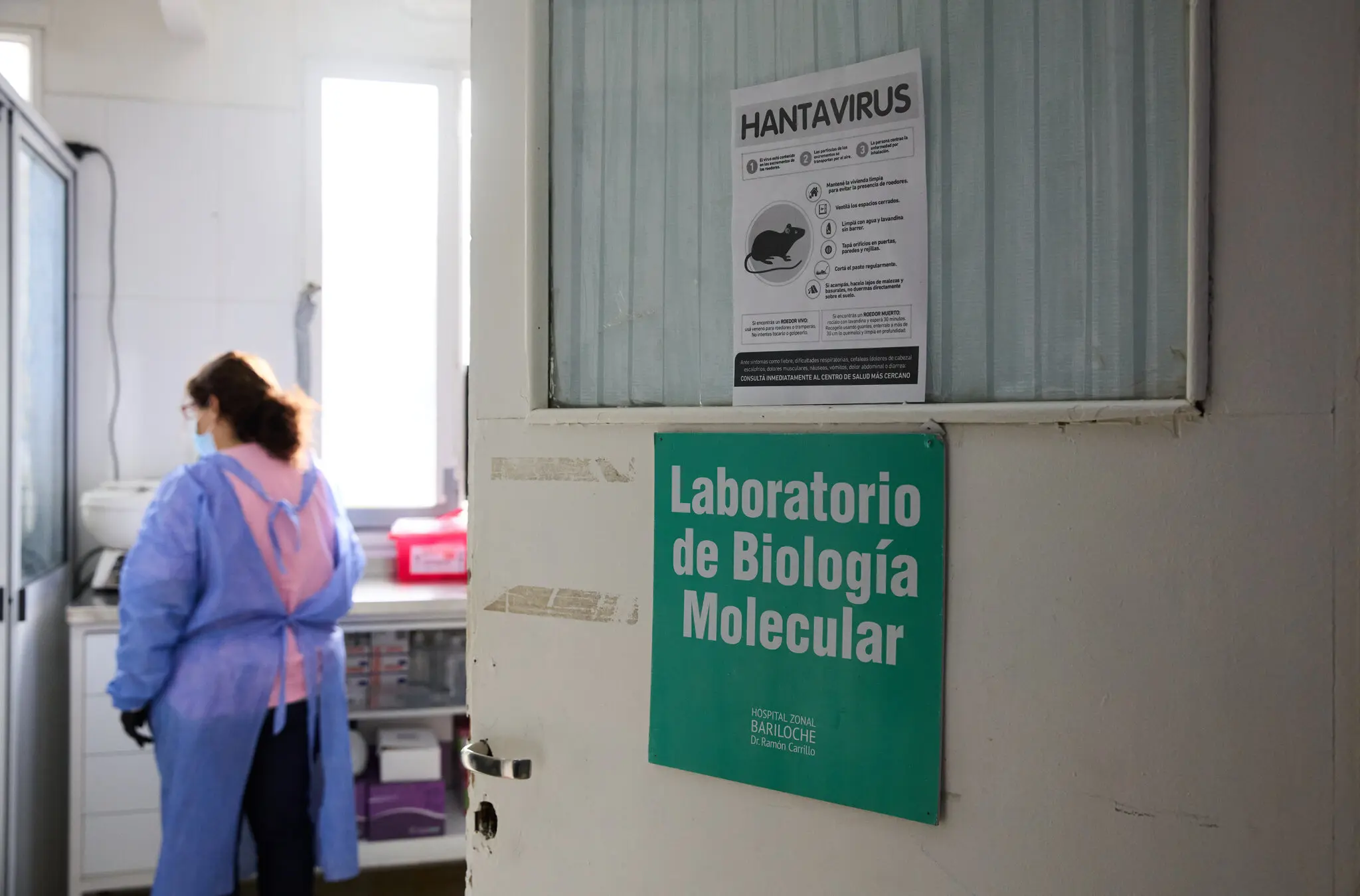

Health authorities in Argentina are conducting an extensive epidemiological investigation to determine the origin of a hantavirus outbreak associated with an Antarctic cruise expedition. The inquiry has focused on reconstructing the travel history of the first identified infected passengers, while scientists continue analysing viral samples to better understand the transmission pathway involved in the outbreak.
The investigation centres on the Andes strain of hantavirus, a variant known to circulate in parts of Patagonia in Argentina and Chile. Unlike most hantavirus strains worldwide, the Andes variant has demonstrated the ability to spread between humans under specific circumstances, particularly during prolonged close contact (Martínez-Valdebenito et al., Viruses, 2014). This characteristic has made the outbreak aboard the cruise vessel a matter of international public health concern.
Authorities in Argentina have stated that the first known infected individuals, a Dutch couple travelling through South America before boarding the vessel, had visited several regions across Argentina, Chile, and Uruguay. However, tracing the exact location of exposure has proven difficult because many of the areas visited are not traditionally considered endemic zones for the Andes strain.
Scientific analysis conducted in Argentina reportedly identified similarities between viral sequences linked to the cruise outbreak and strains previously detected in Patagonia. Nevertheless, investigators continue to examine whether the virus may have spread into new geographical areas where cases had not previously been recorded. Researchers have therefore expanded environmental surveillance activities, including rodent monitoring and viral testing in different locations associated with the travellers’ itinerary.
Hantavirus infections are primarily associated with exposure to infected rodents, particularly through inhalation of particles contaminated with rodent urine, saliva, or droppings. In southern regions of Argentina, the principal reservoir species linked to Andes hantavirus transmission is the long-tailed pygmy rice rat (Oligoryzomys longicaudatus), commonly found in forested environments of Patagonia.
The outbreak investigation has also drawn attention to the challenges of distinguishing scientific evidence from speculation during public health emergencies. Rumours regarding possible sources of infection circulated widely after the cruise incident became public, prompting authorities in Argentina to caution against unverified claims that could generate confusion or negatively affect local communities and tourism sectors.
Medical specialists familiar with hantavirus management in Patagonia have noted that the region has long maintained surveillance and containment protocols due to periodic outbreaks recorded since the 1990s. These measures include rapid isolation of suspected cases, contact tracing, and public education aimed at reducing exposure risks. Previous outbreaks in Argentina, particularly in Patagonia, contributed significantly to scientific understanding of person-to-person transmission involving the Andes strain.
Experts also suggest that confined environments such as cruise ships may facilitate transmission when infectious individuals are not immediately identified. Early recognition of symptoms and strict infection-control measures are therefore considered essential in limiting spread in such settings.
The ongoing investigation in Argentina underscores the importance of coordinated epidemiological surveillance, environmental monitoring, and international cooperation in responding to emerging infectious diseases. Health authorities continue to monitor the situation closely while researchers work to clarify how the outbreak began and whether the virus may be circulating beyond traditionally recognised endemic areas.