

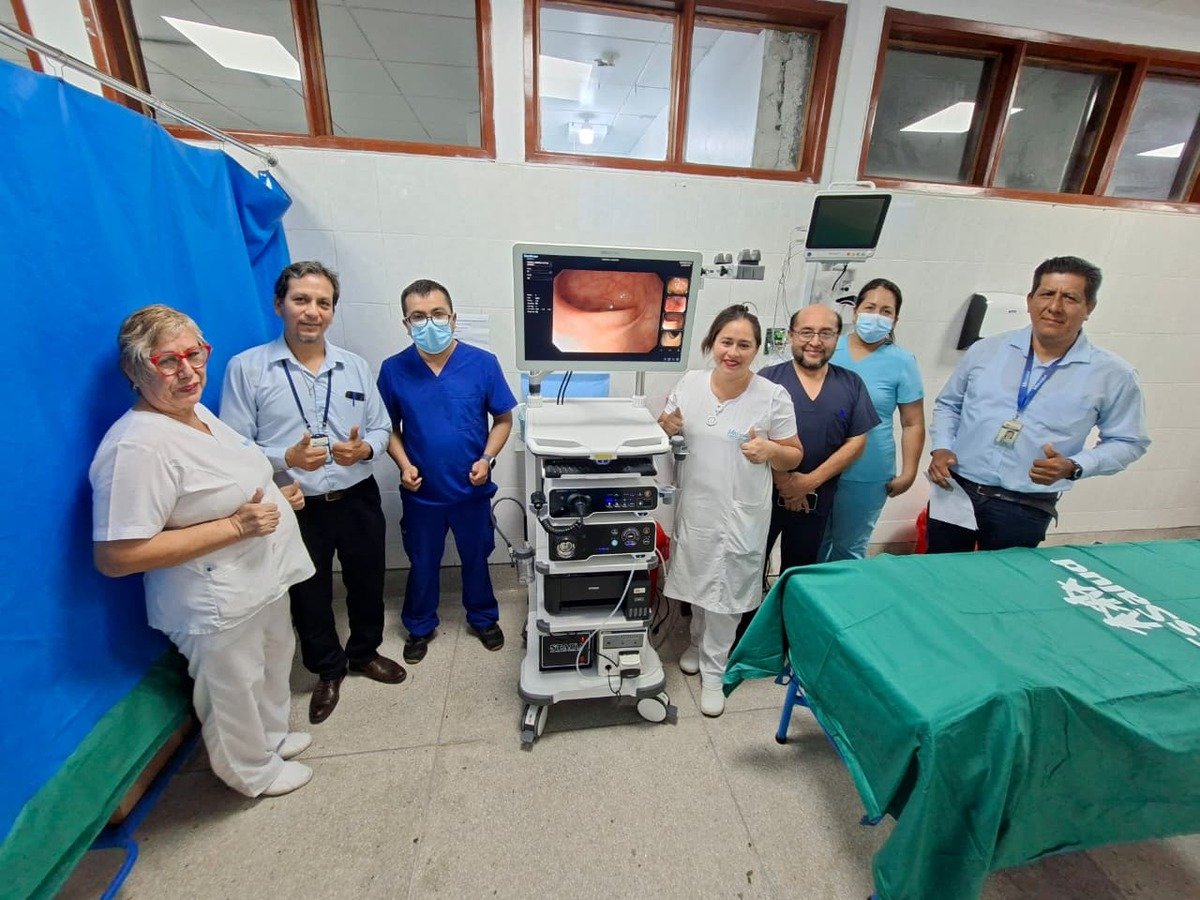

Healthcare services in Peru have taken a significant step forward with the introduction of advanced endoscopic technology at a major hospital in the Loreto region. The initiative is designed to enhance diagnostic capabilities in gastroenterology while addressing longstanding delays in patient care.
The newly implemented system enables both upper and lower endoscopic examinations to be conducted more efficiently within the hospital setting. This development is particularly important in regions where demand for specialised procedures has historically exceeded available resources, often leading to extended waiting periods and reliance on outsourced services.
Modern endoscopy plays a crucial role in the early identification of gastrointestinal conditions, including colorectal cancer. According to research published in The Lancet Gastroenterology & Hepatology, timely endoscopic screening significantly improves detection rates of precancerous lesions and early-stage malignancies, thereby increasing the likelihood of successful treatment outcomes. The integration of high-definition imaging and enhanced visualisation techniques allows clinicians to identify subtle abnormalities that may not be visible with older equipment.
The newly installed system incorporates advanced imaging technologies, including high-resolution video processing and enhanced visual contrast methods, which improve diagnostic precision. These features are aligned with current clinical standards that emphasise early intervention as a key strategy in reducing morbidity and mortality associated with gastrointestinal diseases.
In addition to improving diagnostic accuracy, the availability of on-site endoscopy services is expected to streamline patient management. By reducing dependence on external providers, healthcare teams can respond more rapidly to urgent cases and ensure continuity of care. This is particularly relevant for patients requiring immediate assessment, such as those presenting with gastrointestinal bleeding or suspected malignancies.
The expansion of local diagnostic capacity is also anticipated to have a measurable impact on patient flow. Health administrators estimate that hundreds of individuals each month may benefit from the increased availability of procedures, contributing to a gradual reduction in existing backlogs.
From a broader public health perspective, the initiative reflects a growing emphasis on strengthening healthcare infrastructure in underserved regions of Peru. Investment in modern medical technologies, combined with improved service organisation, is widely recognised as essential for achieving equitable access to high-quality care.
As global evidence continues to highlight the importance of early detection in improving survival rates, particularly for colorectal cancer, initiatives such as this underscore the role of technological advancement in modern healthcare systems. By enhancing diagnostic efficiency and accessibility, healthcare providers are better positioned to deliver timely, effective interventions and improve overall patient outcomes.